Northern Ireland is set to become the first country in the UK to introduce stricter rules for new drivers to try to reduce the number of accidents involving young people with their graduated driver licensing scheme.
The new reform will be known as graduated driver licensing, which will introduce several new laws that come into effect in October 2026 for all new drivers, but are aimed specifically at 17-23 year olds.
Here, we take a look at the legislation and what it means, both for you or your child who is learning to drive.
What is graduated driver licensing?
Graduated driver licensing, or GDL, is a new phased approach for learners to gain a full driving licence and will apply to all new drivers. The idea is to introduce structured stages that will help build drivers’ skill level and their experience over a set period of time to help stand them in good stead for when they obtain their licence.
It is designed to ensure new drivers build real-world experience across different traffic and road conditions, as opposed to learning just enough to pass their driving test quickly.
As part of GDL, you will need to pay a fee of £17 to use the app for the Category A (motorcycles) and Category B (cars) Programme of Training Logbook.
Similar models have been used in Australia and the United States and it is being aimed at reducing accidents among young drivers, with Northern Ireland, who are the first in the UK to do this, hoping to address the number of 17-23 year olds who have been involved in road incidents.
When does graduated driver licensing start in Northern Ireland?
The GDL in Northern Ireland is set to start on October 1, 2026. From this date onwards anyone applying for a new provisional driving licence will officially enter the graduated driver licensing system rather than the current learning process.
This means new learners will be subject to the minimum six-month learning period that is being introduced, with structured training requirements and revised rules for newly-qualified drivers after they have passed their driving test.
As learners will need to complete at least six months of supervised driving before they can sit their practical test, the first tests under the GDL system are expected to take place from April 2027.
Anyone who is an existing learner driver or becomes a fully qualified driver before October 1, 2026 will not be affected by the changes. Those who are currently learning have until March 31, 2027 to take and pass their practical driving test before they enter the new system.
Who will graduated driver licensing apply to?
Graduated driver licensing will apply to new learner drivers who are applying for a provisional driving licence from October 1, 2026 and onwards. If you enter the learning process after this date, you will automatically be entered into GDL.
Whilst the scheme is aimed at younger learners, it will still apply to learners aged 23 and above as you will still be classed as an inexperienced driver. This is not a new system designed to punish younger drivers, but instead is there to help increase traffic safety for all, including those who learn later in life.
If you have a provisional licence before October and become a fully-qualified driver, you will not be affected by GDL.
Graduated driver licensing rules in Northern Ireland
The major rule changes in Northern Ireland due to the graduated driver licensing scheme are:
- New drivers can’t take their driving test for at least six months after being granted their provisional licence, with the exemption of carers
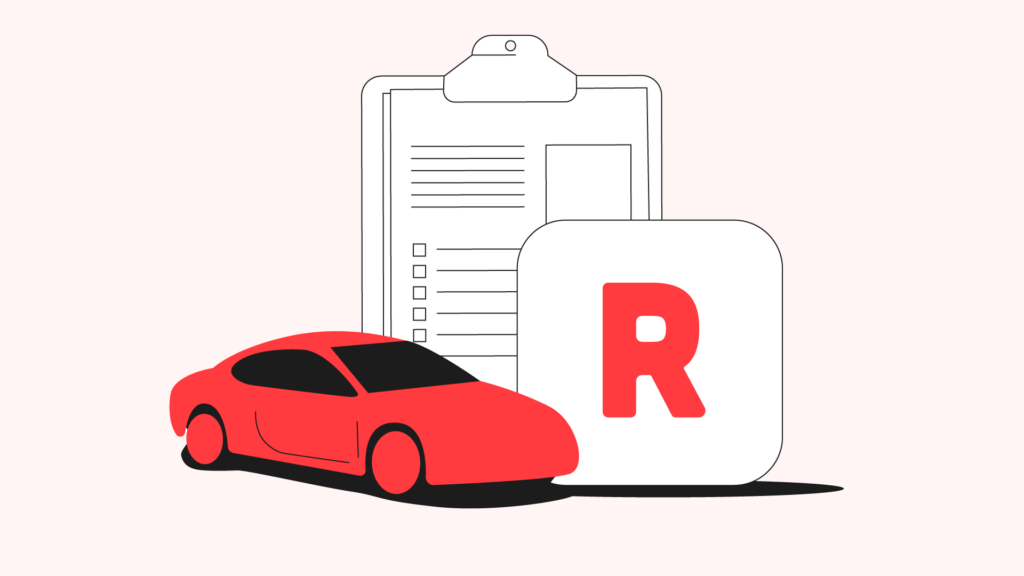
- Learners must complete 14 modules (there’s also an optional 15th) in the digital Programme of Training Logbook, which need to be signed off by an approved driving instructor or supervising driver (parent/guardian)
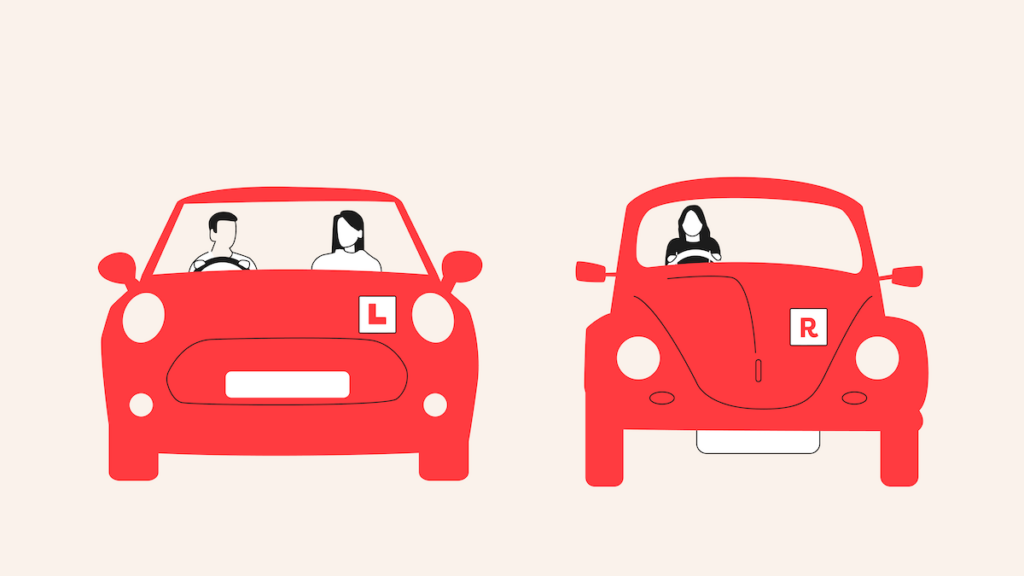
- The restriction period of new drivers needing to display ‘R’ plates is increasing from 12 to 24 months after passing their driving test. A different colour ‘R’ plate will signify a driver who is in their initial six-month period. This will be a blue ‘R’ on a white background before a white ‘R’ on a blue background should be used for the remaining 18 months.
- New drivers up to the age of 24 can only have one passenger aged 14-20 in their car between the hours of 11pm-6am for the first six months. This does not include immediate family members. Passenger restrictions also don’t apply if the accompanying person in the front passenger seat is aged 21 and over, and has held a full licence for at least three years.
- Learners can only drive on the motorway if accompanied by an approved driving instructor and can drive up to the speed limit after passing their test.
- There will be a removal of the current 45mph speed restriction that’s currently in place for learners and new drivers.
If you fail to adhere to these rules and others included in the new scheme, you can face up to three penalty points or a fine of up to £1,000.
How graduated driver licensing in Northern Ireland compares to the rest of the UK
So far only Northern Ireland has decided to introduce the GDL. If you live in England, Scotland or Wales, these rules don’t apply to you at the time of publication.
Installing a graduated driver licensing programme has long been discussed within the UK road safety circles but at the moment it’s only been adopted by one country.
What does graduated driver licensing mean for learner drivers and parents?
Graduated driver licensing will mean a more structured and gradual learning experience for every new driver in Northern Ireland from October 2026.
This will help give parents further reassurance that their child has a wider knowledge and experience of road safety regulations after they’ve passed their test. Newly-qualified drivers will face restrictions in their early months such as limits on night-time driving and carrying younger passengers.
The new system will take longer to earn a full driving licence, but the aim is to hopefully produce safer, more confident drivers and improve road safety for everyone.
Learner driver insurance from Sterling NI
We’re sure you’re eager to keep taking to the road while you wait to take your driving test. That’s why it’s paramount you get the right insurance for this when you’re learning with family or friends.
We find short and long-term learner driver insurance for private practice sessions so you can get cover for the period leading up to your test. You can also get young driver insurance for when you undoubtedly pass!
Sterling has over 30 years’ insurance experience. To get a quote call 0344 381 9990 or request a callback at a time that best suits you.