A new era for drivers in Northern Ireland is just weeks away from beginning as graduated driving licences finally become a reality.
The significant reforms, first announced 10 months ago, come into effect on October 1, 2026 and impact all new drivers in a bid to reduce fatal crashes involving young people. Northern Ireland is the first country in the UK to introduce the rules for learners and newly qualified motorists.
But how do people in the North really feel ahead of the changes kicking in? Sterling Insurance were keen to find out, so surveyed just over 800 drivers in the country to help give them a voice ahead of the most significant changes to motoring in 70 years.
What is a graduated driving licence?
A graduated driving licence, or GDL, is a type of scheme aimed at improving road safety by placing restrictions on drivers who are yet to take their practical exam or have just passed it.
Our complete guide to the subject provides in-depth analysis, but some of the key points include:
- Provisional licence holders can’t take their driving test for at least six months, with the exception of carers.
- Learners must complete 14 modules during training. These need to be signed off by an approved driving instructor or supervising driver (parent/guardian).
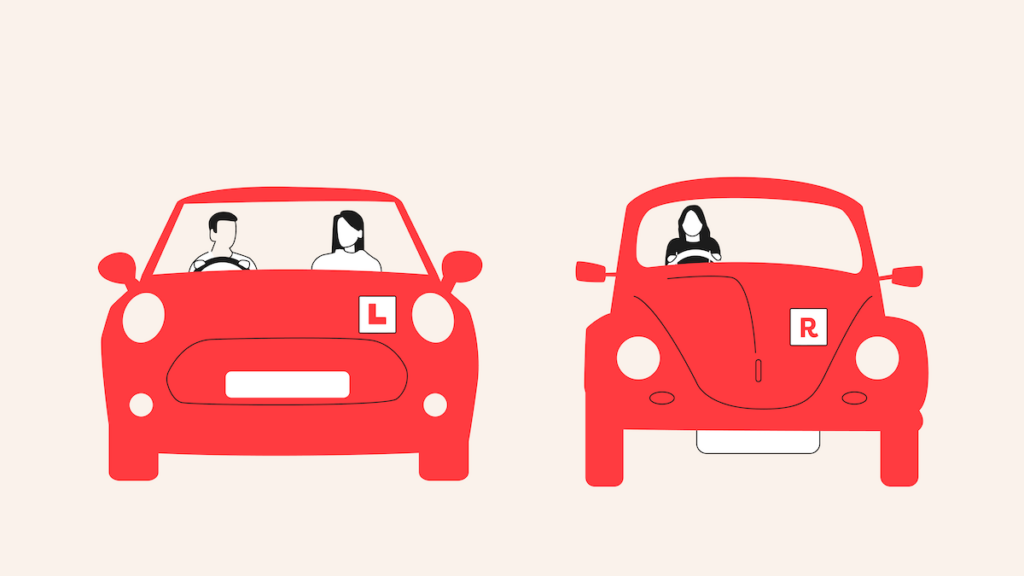
- Newly qualified motorists now need to display R plates (restricted plates) on their cars for 24 months rather than 12.
- New drivers up to the age of 24 can only have one passenger aged 14-20 in their car between the hours of 11pm-6am. This does not include immediate family members.
- The current 45mph speed limit for R-plate motorists has been removed.
Drivers who do not follow the new rules could receive three penalty points or a fine of up to £1,000.
Anyone who became a provisional driver before October 2026 will not be affected by the changes.
Young drivers fear increased intimidation over R plate changes
Learner drivers in Northern Ireland have long been used to travelling around with R plates on their vehicle to show they’re not an experienced motorist.
But 44% of learners we spoke to already felt targeted, bullied or intimidated on the roads due to the restrictions. So having the signs on the vehicle for another 12 months is only going to exacerbate the negativity.
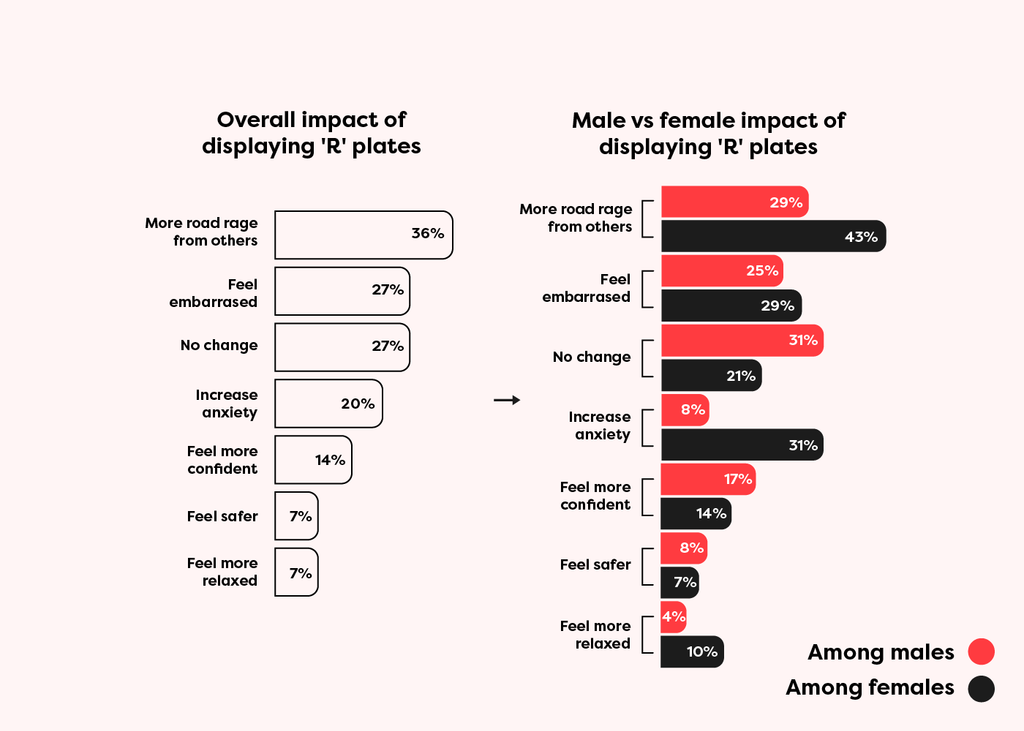
A total of 36% said displaying R plates would lead to more road rage – with women feeling more fearful than men. Around 30% of respondents feel embarrassed about displaying them, while 20% expect to suffer increased anxiety when behind the wheel. That one in five figure is mainly down to 31% of women saying they would be worried, compared to only 8% of men.
Worryingly, only 14% say they’ll feel more confident about displaying R plates for longer, and just 7% will feel safer as a result of changes that are meant to better protect them on Irish roads.
New restrictions will negatively impact our prospects, says young drivers in NI
Although all new drivers, regardless of their age, will be affected by the changes, it’s quite clear that a large majority of those will be teenagers and young adults.
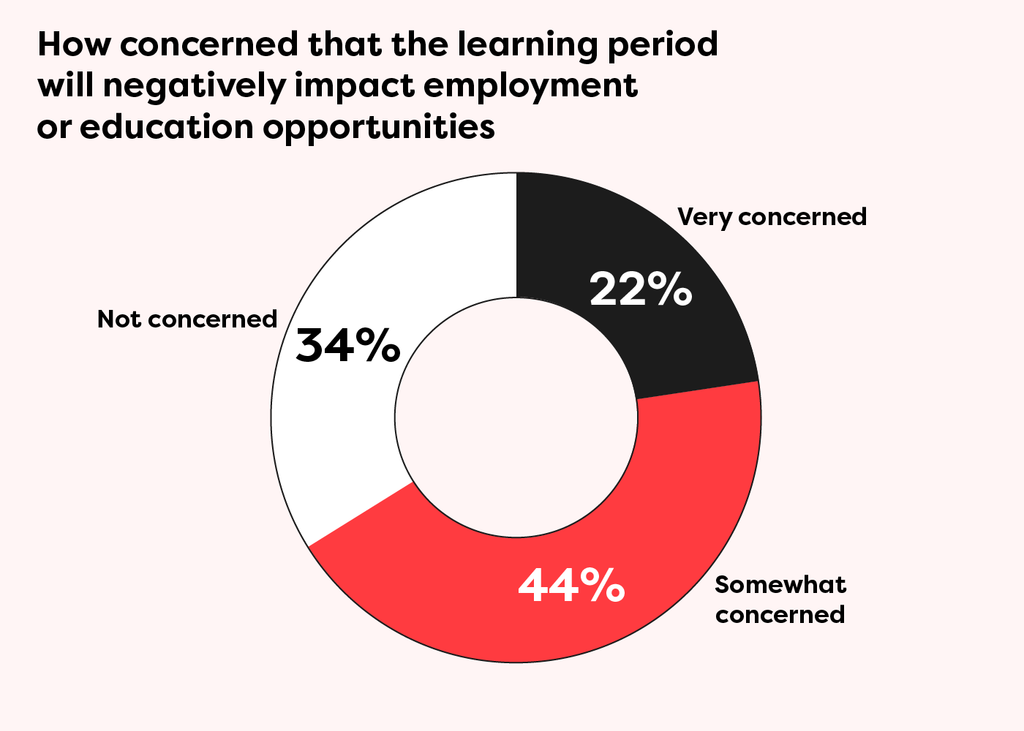
With many still at college or taking their first steps into the world of work, it’s troubling to see that two thirds are concerned that the enforced learning period will negatively affect their employment or education opportunities. Those financial doubts won’t be helped by 40% believing that the use of mandatory logbooks will force them to pay for more lessons than they can afford during a cost-of-living crisis.
Warning to economy over fears that curfew will affect socialising
The cost-of-living crisis isn’t helping businesses, and it looks like they’ll also be feeling the pinch once GDL begins.
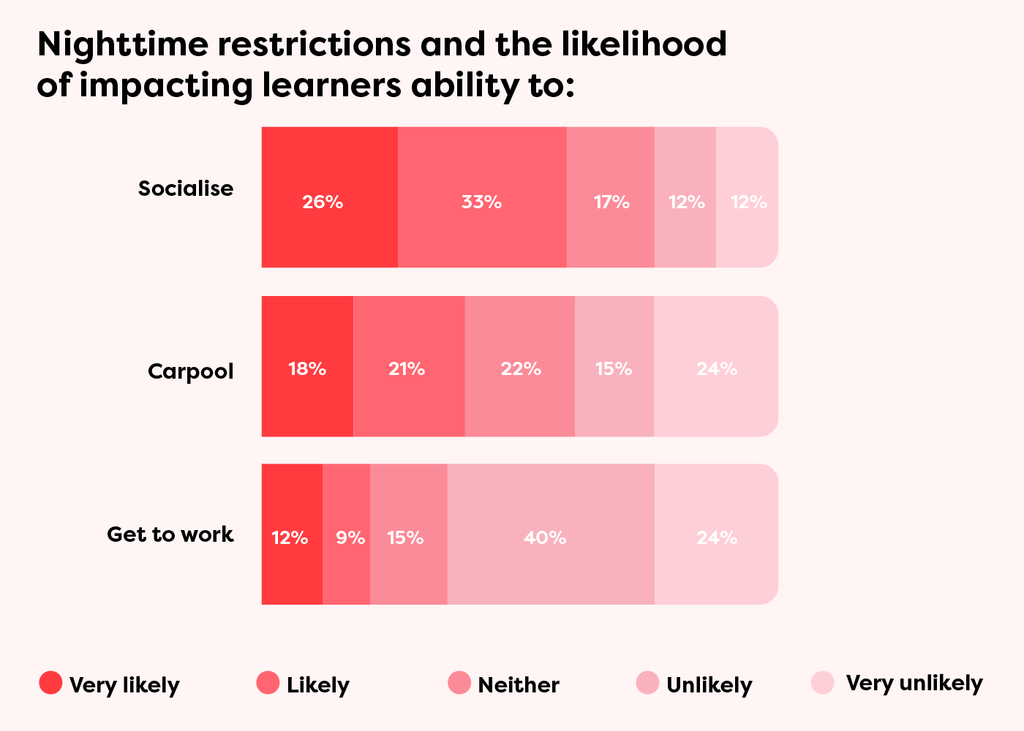
Nearly three in five of respondents stated that they are very likely, or likely, to lose the ability to socialise thanks to the night-time curfews on passengers. An even greater number, at 67%, will turn to their parents or guardians to get home once restrictions are live – no doubt causing many to have to stay at home at times.
One in 10 drivers said they will be willing to flout the rules if it means a friend can get home safely and cheaply. This may be more prevalent in rural areas due to a lack of public transport, but time will tell.
Positivity about GDL will grow if insurance prices decrease
The survey covered a wide range of areas and provided plenty of other key takeaways including:
- There is public doubt over the effectiveness of GDL, with fewer than four in 10 believing the new laws will actually reduce collisions and accidents.
- Fully qualified drivers are between 10 and 20 percentage points more in support of the laws than learner drivers.
- Almost 50% of full licence holders believe the restrictions are fair, whereas 42% of learners argue that while they understand the reasoning, the rules are “too harsh”.
- Nearly 70% of respondents will feel more positive about the scheme if it means insurance prices decrease.
Insurance cover for new and young drivers in Northern Ireland
Whether you like graduated driving licenses or not, you’re still going to require car insurance.
We can help you find the most affordable and appropriate policy as a young or new driver at one of the most expensive stages of your motoring journey.
Call 0344 381 9990 for a free quote or book a callback at a time that suits you best.