
A clutch is one of the most integral parts of a vehicle, but how much does it cost to replace one and how long do they last?
Here, we answer all the questions you need to know about clutches, including how much it costs to replace a clutch, warning signs that they’re going wrong and what it actually does in your car.
What is a clutch?
The clutch is one of the most important components of a car’s transmission system as it connects the engine to the transmission to allow seamless engaging and disengaging power to the wheels so your vehicle can move.
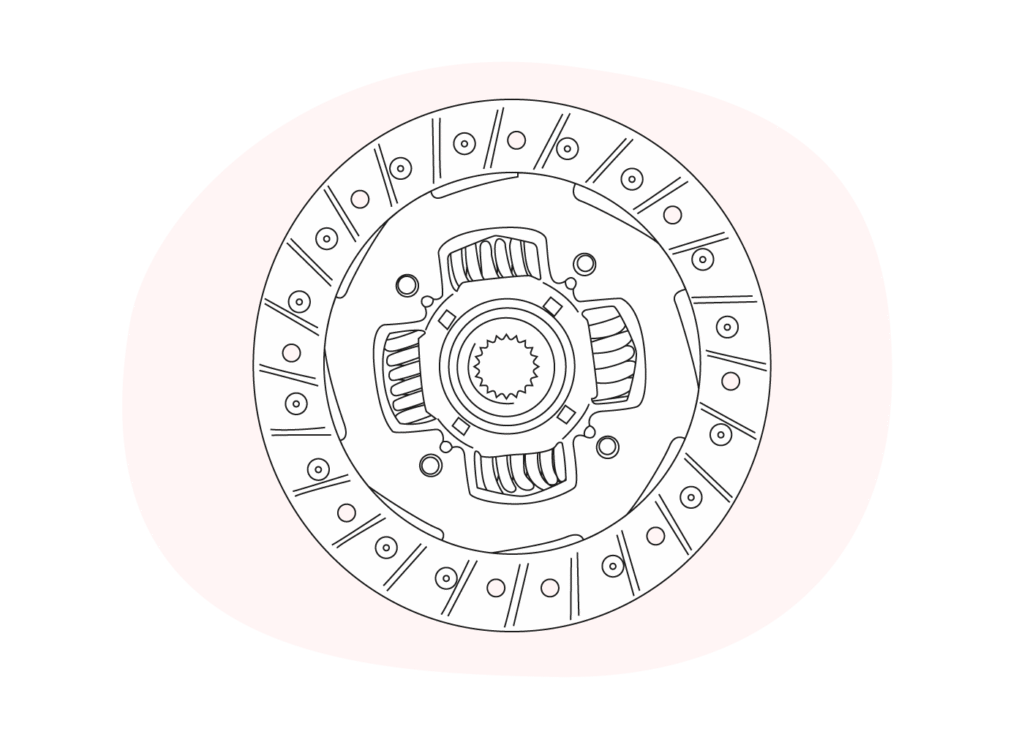
It has three main parts: the pressure plate, which applies pressure to the clutch disc, the clutch disc itself, which connects to both the engine and transmission, and the engine flywheel, which stores rotational energy. They all work together to allow for smooth gear changes.
Despite what many people may believe, both automatic and manual vehicles have clutches. The main difference is in the latter, you need to change the gear yourself, which is why you have a clutch pedal. In the former, gear changes are done for you using a torque converter.
How long does a clutch last?

A clutch pedal’s lifespan can depend on a number of factors, including your vehicle type, driving habits and how well maintained your car is. However, a general rule is it can be expected to last in the region of 50,000 to 100,000 miles.
Unfortunately, due to it being one of the hardest-working components in your car, it will still need replacing at some point. The good news is there are a few ways you can help your clutch last closer to the 100,000 mile range. The way you drive is arguably the biggest contributing factor to how long it can last. Having a smooth and steady driving style can have a great effect on your clutch’s lifespan.
You should aim to accelerate and decelerate gradually and always use the correct gear for your speed and the driving conditions of the road, such as the weather. Many drivers get into a bad habit of not putting their car into neutral when stopping at traffic lights or in a queue of traffic, but it’s best to do this.
Heavier vehicles such as SUVs, vans and trucks will see their clutches wear out quicker, and the same can be said for performance and sports cars. Automatic owners will see their cars last longer than those of their manual counterparts, as there are fewer mechanical parts that are prone to wear and tear.
Try to ensure your car is meeting its maintenance schedule by having your vehicle serviced every year.
How to tell when you need a new clutch
There can be a few telltale signs that you need a clutch replacement, including:
- You notice that your clutch is slipping
- The clutch pedal may feel spongy
- The car has less power than it used to or should
- The car is not accelerating as normal
- You notice a burning smell
- You have difficulty changing between gears
- The clutch is jolting, is stiff or it’s vibrating when the engine is running
- It has more biting point than normal
- You hear noises such as squeaking, grinding or other mechanical sounds
If you notice any of these issues, the best thing to do is to take your car to a mechanic as soon as possible. Even a small delay in getting it seen to can make a big difference in the clutch repair job needed, and in turn, the price you will have to pay.
If the damage is really bad, you could also be endangering not only yourself, but other road users as well. If the slipping gets worse or your car struggles to move, stop driving and book a mechanic or call your breakdown cover provider.
Remember, not having breakdown insurance can also cause you to shell out hundreds of pounds more when you need it. That’s why it’s best to understand the true cost of not having breakdown cover before you need to use it.
If you haven’t taken out breakdown cover with your car insurance policy, Sterling can offer instant breakdown cover to get you back on the road.
What are the main causes of clutch damage?
The most common cause clutches need to be replaced is because drivers often ‘ride the clutch.’ This is where you keep applying pressure on the pedal, sometimes even if it’s only slight pressure, after you’ve changed gear.
In doing so, you are pressing both the clutch and the accelerator together, causing the former to wear out much faster. The key is to remove your foot completely from the pedal after you’ve shifted up or down a gear.
Overloading your vehicle can also shorten the lifespan of your clutch. This includes having heavy loads when towing or carrying more than you should in your car. This is because you are asking the vehicle to work harder than it should. Whilst we all put extra luggage in our vehicles from time to time, doing so frequently can cause extra strain. So be sure to remove any excess weight when you don’t need it.
Driving aggressively is something you should never do, but it’s also a quick way to ruin your car. Accelerating fast from a parked or standstill position, changing gear too fast (or too often) and braking sharply can also cause wear and tear. You should also not get into the habit of using your clutch as a replacement for your handbrake when stopped at traffic lights and in traffic jams.
How much does it cost to replace a clutch?
As mentioned previously, clutches should last between 50,000 and 100,000 miles, but it depends on how the car has been driven.
It’s estimated that replacing a clutch, be it manual or automatic, can range from £300 (for a small car) to £1,000, depending on the make and model of the vehicle and the extent of the damage.
If you need a new clutch, you can expect to fork out between £500 and £1,000. It will of course come down to which parts will need fixing or replacing. Usually if it’s the latter, other work may need to be carried out to make sure your car is in working order, which can raise the price.
Whilst you may need to pay an expensive fee, the clutch is a crucial working part of your vehicle and should not be overlooked for the safety of yourself and other road users.
Breakdown cover is there when your clutch fails
A faulty clutch can go from mild to severe pretty fast and can endanger you and other road users. If the car suddenly stops moving, you may need roadside help.
With Sterling instant breakdown cover, you can get:
- Instant breakdown cover, available immediately
- Service for vehicles at the roadside
- Home start
Planning ahead is always best, but we all know breakdowns don’t wait for a convenient time. If you need cover right away, give us a call on 0344 381 9959, and we will get it sorted. Or book a callback at a time that suits you.