
Passing your driving test is a big milestone for anyone, but after celebrating your achievement, there are a few legal steps you’re required to complete before you can get behind the wheel of a car by yourself.
Here, Sterling looks at what you’ll need to do in order to start driving, including making sure you have the right car insurance in place.
How long do you have to wait after passing your driving test to get your driving licence?
After you have passed your driving test, the Driver and Vehicle Licensing Agency (DVLA) will send you your full licence automatically.
This is because your examiner will request to take your provisional licence after the test and arrange for your full licence to be created, at no extra cost. They will also give you a certificate to say you’ve passed.
It can take up to three weeks for your driving licence to arrive in the post, with most coming between five and 10 working days from the date you passed. However, you should wait for 21 days in total before contacting the DVLA to ask where it is if you still haven’t received it.
Driving examiners may also log that you’ve passed your test digitally. They use tablets to record to the DVLA that you were successful, and it is usually processed within 24 hours. It’s worth nothing though, that the government ‘One Login/Wallet’ app has not been rolled out yet at the time of publication and that the DVLA’s new Digital Driving Licence (mDL) has not been fully rolled out either, so be cautious as to whether you are able to see your full driving licence digitally before getting behind the wheel.
However, you will need to apply for your own driving licence if you do not hand over your provisional licence after the test. Some people may opt to do this because they need the photocard as proof of identity. If you change address or your name in the meantime or shortly after passing, or you have an old provisional licence issued before 1998, you will also need to apply yourself. For old provisionals handed out pre-1998 you will need to provide a physical passport-styled photo and a form of ID, such as a passport, because the DVLA won’t have a photo of you on file, as they are different from modern-day versions that only last 10 years. The good news is the government website details how you will need to do this.
Note that if you are applying for your own driving licence, you will only have two years to apply from when you receive your pass certificate. If you don’t, your pass will become invalid and you will need to retake your test.
Can you drive straight after passing your driving test?
The answer most new drivers will want to know is whether they can drive straight away, after all, you may already have bought a car. The good news is as soon as you have your driving test pass certificate, you’re legally allowed to drive, as long as you have sorted your car insurance. You do not have to wait for your plastic driving licence in the post, as your certificate is certified proof you are a qualified driver, so it’s a good idea to carry this with you whilst you wait for your licence to arrive in the post.
If you are a Northern Ireland resident, it’s worth noting that new changes are coming as of October 2026, with the graduated driver licensing reform coming into play. Drivers will be under ‘R’ (restricted) status for two years.
New drivers in Northern Ireland up to the age of 24 will also only be allowed one passenger aged between 14 and 20 between the hours of 23:00 and 06:00 for the first six months after passing their test. Those restrictions don’t include immediate family members or apply if someone aged 21 and over, who has held a driving licence for at least three years, is sitting in the front seat, according to the BBC.
There’s also the matter of making sure you’re insured properly, after you pass, as driving uninsured is against the law.
If you have learnt to drive in your car, you will need to inform your car insurance company straight away that you are now a qualified driver, as your learner driver cover will not count once you pass your driving test, even if you’re just driving home from the test centre or you’re driving home with the person who legally supervised you getting there.
Driving without car insurance can result in your licence being revoked, six penalty points and a fine. You will also need to ensure your car has vehicle tax before hitting the road.
There are three levels of cover for car insurance: third-party only, third party, fire and theft and comprehensive cover.
You may also want to think about taking out black box insurance. This will see a telematic box installed in your vehicle to track how you drive, with drivers who have been deemed safe for a year potentially saving money on their renewal price. Breakdown insurance is also worth considering to ensure you’re not left stranded on the side of the road, should your car break down.
What plates do you use after passing your driving test?
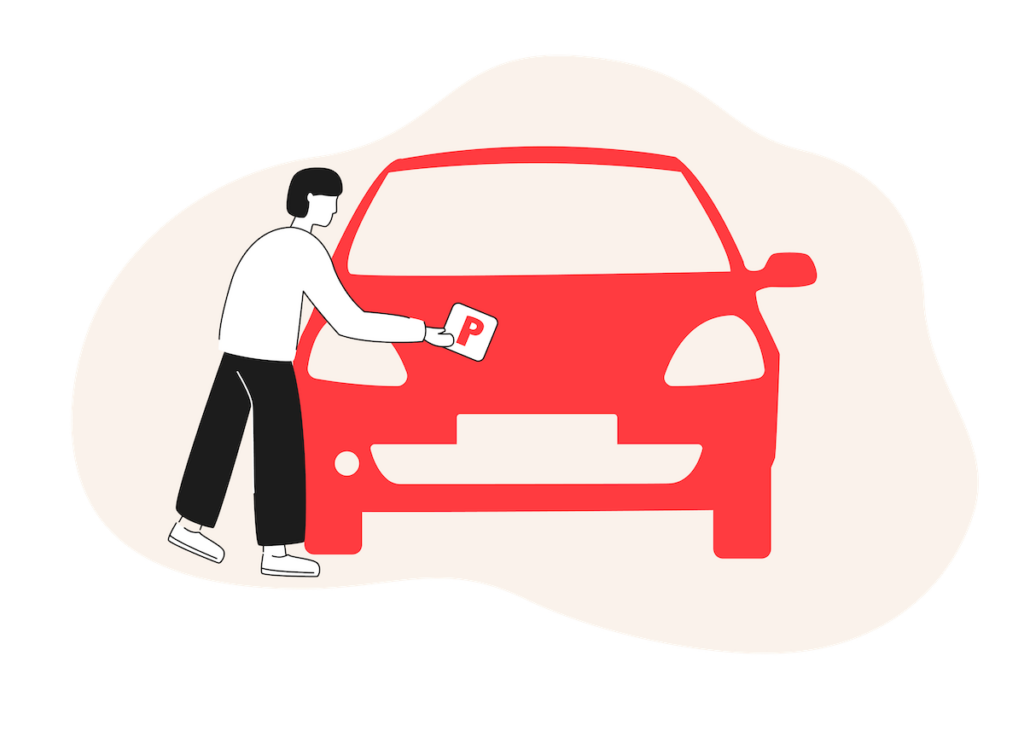
In England, Scotland and Wales, you do not need to put plates on your car after you pass your driving test, but it might be a good idea to. You can put ‘P’ plates to tell other road users that you are a newly qualified driver.
Once you have passed, you will no longer need the ‘L’ plates or ‘D’ plates in Wales. This is because you are no longer a learner driver.
If you drive in Northern Ireland you will need an ‘R’ plate added to your vehicle. The current rules state you must do this for 12 months after passing your driving test and you will be legally restricted to 45mph.
If you pass after 1st October 2026, you will need to display the correct ‘R’ plate for 24 months from the date you pass – the first six months will require a different-coloured ‘R’ plate than the next 18 months – and the speed limit will be removed, with drivers being able to travel faster on roads they are permitted to do so on.
Not displaying an ‘R’ plate can see you receive a fine and three points on your driving licence.
Young driver insurance
We know it can be tricky to find an insurance quote as a young or newly qualified driver, that’s why we’re on hand to help you find young driver insurance that suits you. Sterling can make sure you’re insured properly as soon as you get that pass certificate.
Call us on 0344 381 9990 for a quick, no-hassle quote or book a callback at a time that suits you.