
Many of us dream of driving along Scotland’s NC500 route, but just how exactly should you plan your journey?
That’s why we asked Simone Stewart to put together a travel guide for those who wish to take a campervan to this stunning part of the UK.
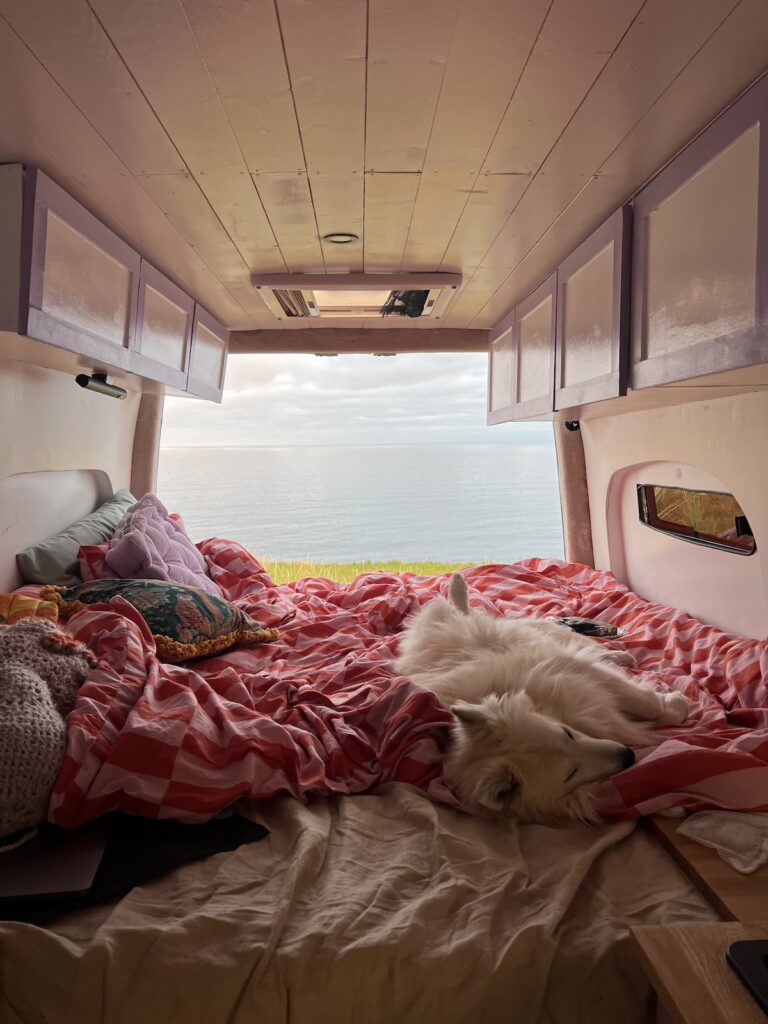
Even after spending half of the year travelling around Europe, the NC500 was still my favourite road trip of last year. It was just me and my dog (Roo) travelling in our converted van (Betty), taking in the most incredible landscape in the UK.
By some miracle, the weather was on my side; it was 20+ degrees most days, and I think I could have fooled some people into thinking I was in Greece. My family joked that this week was the best advert for Scotland I could possibly create, but regardless of the weather, this route is incredible.
Rain or shine, you will still experience some of the most spectacular views you have ever seen. The drive was an experience in itself. Once I got to the West Coast, I stopped every 20 minutes just to keep looking at the view!
This guide is predominantly a dog-friendly itinerary, but I am also going to share some activities that I have planned for my next trip to the NC500 in two weeks’ time without the dog (yes, I really did love it that much).
The Route
Day 1: Loch Ness and Inverness
Loch Ness is technically not part of the NC500, but as it’s so close and you’ll be driving right by it. It seems silly not to stop and make it part of this trip! If you’ve done it before, you can skip straight to Day two, but if not, I highly recommend making it the first stop on your trip, whilst you’re already this far North.
Loch Ness is the home of Nessie, the legendary mythical creature that inhabits the Loch. You’ll have to go and see for yourself if the legend is true.
The most accessible entry to the Loch is from Dores Beach (this is also at the north end, 10 kilometres from Inverness, so you won’t be far off the route). You can swim here, and boating is also popular. You might even get an up close and personal sighting of Nessie!
From here, you can head into Inverness and explore the city. There is lots to do in Inverness, from restaurants and cafes to shopping and galleries. You can also walk along the River Ness or visit Inverness Castle if you’re up for some history.
Day 2: Inverness – Wick
If you fancy a wildlife excursion from Inverness, you can go dolphin watching with the Dolphin Spirit wildlife cruise from Inverness Marina. This is a two-hour cruise. They start early in the morning, which is a great way to start the day. (Dogs are allowed on the boat).
If you love chocolate, then Cocoa Mountain in Dornoch is a must stop. It’s a chocolate cafe that is famous for its delicious hot chocolate. There is also a beautiful beach at Dornoch.
For a beautiful, but not particularly difficult walk, stop at Big Burn walk car park, where you can venture into the woodland to see a waterfall.
And for a more challenging hike, stop at Whaligoe Steps for breathtaking views of the cliffs. The car park here is small with limited spaces, and unfortunately, there weren’t any spaces when I arrived, so I had to move on, but if you’re lucky enough to find a space, the views from Google Maps alone look amazing. I was sad to miss out.
This is where I drove past a sign in Keiss for £15 parking in someone’s garden with views overlooking the sea. No facilities, but perfect if you’re self-sufficient for a peaceful night with views of the sea and Old Keiss Castle.
Alternatively, you could carry on to the campsite at Hillside Motor Home & Caravan Site, or up to John O’ Groats Caravan and Camping Site, they have lots of spaces and are close to the sea.
Day 3: Wick – Thurso
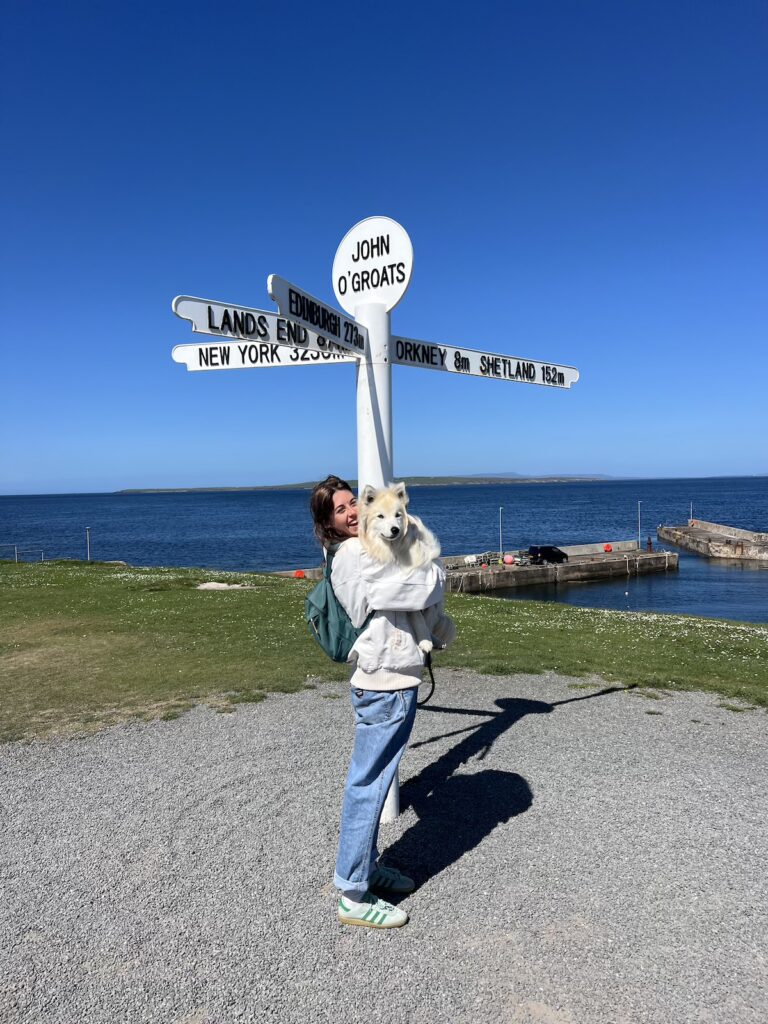
John o’ Groats. This is one of the most popular stops en route to get a picture with the iconic signpost that marks the top of mainland UK. It’s as cheesy as it sounds, but nonetheless it felt like a rite of passage that I needed to take part in.
There are a couple of lovely independent shops here, along with your tourist souvenirs, and a few cafes to eat at. I had food at Cafe Groats, which was lovely, and had great views of the sea. Parking here can be challenging if its peak season, but there are spaces big enough for motorhomes.
From here, you can also visit Dunnet Head Lighthouse, where, between April and August you might catch a glimpse of a puffin! Annie’s Bakery is a lovely stop for lunch or some homemade cakes. If you like gin, you can take a tour at Dunnet Bay Gin Distillery (this is on my list for the next trip).
You will drive through Thurso town, which has the last big supermarket for the next three days – a Tesco superstore – so if you need to stock up on supplies or get petrol/diesel, this is a great place to do so.
Melvich beach. A beautiful, big sandy beach. From the car park, it’s a walk down a hill to the beach, but it is well worth visiting! The sea is unbelievably clear.
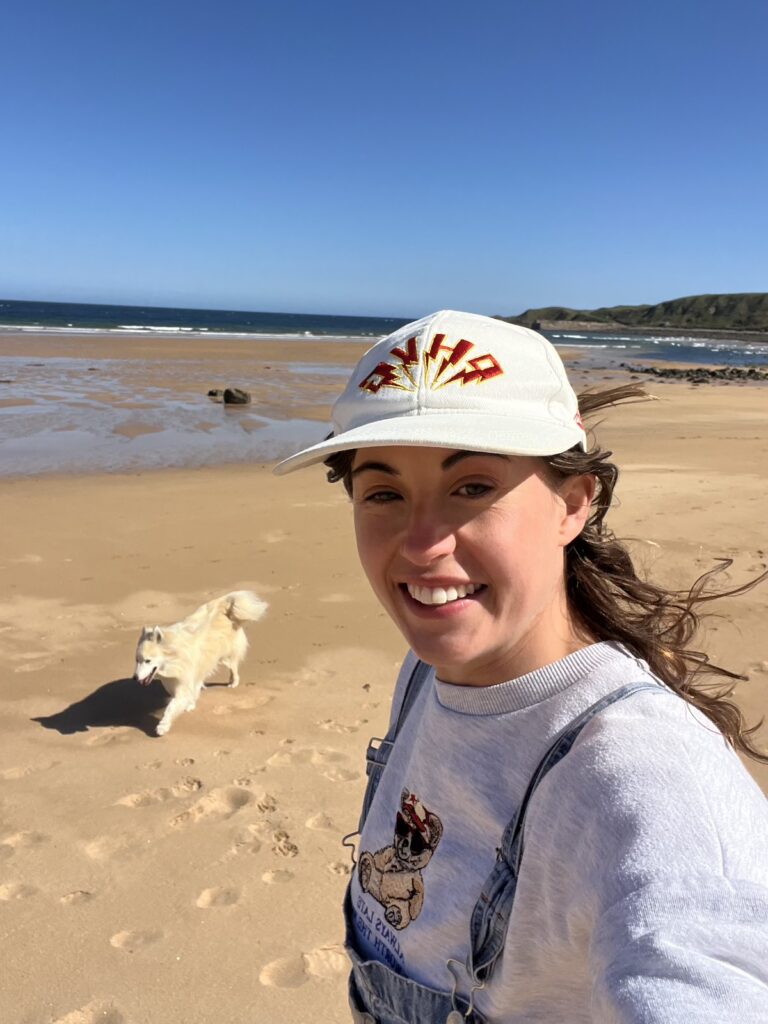
Take a pit stop at the Coastline Coffee shop for really delicious ice cream. Strathy beach is equally as beautiful as Melvich, with golden sand and some caves to explore.
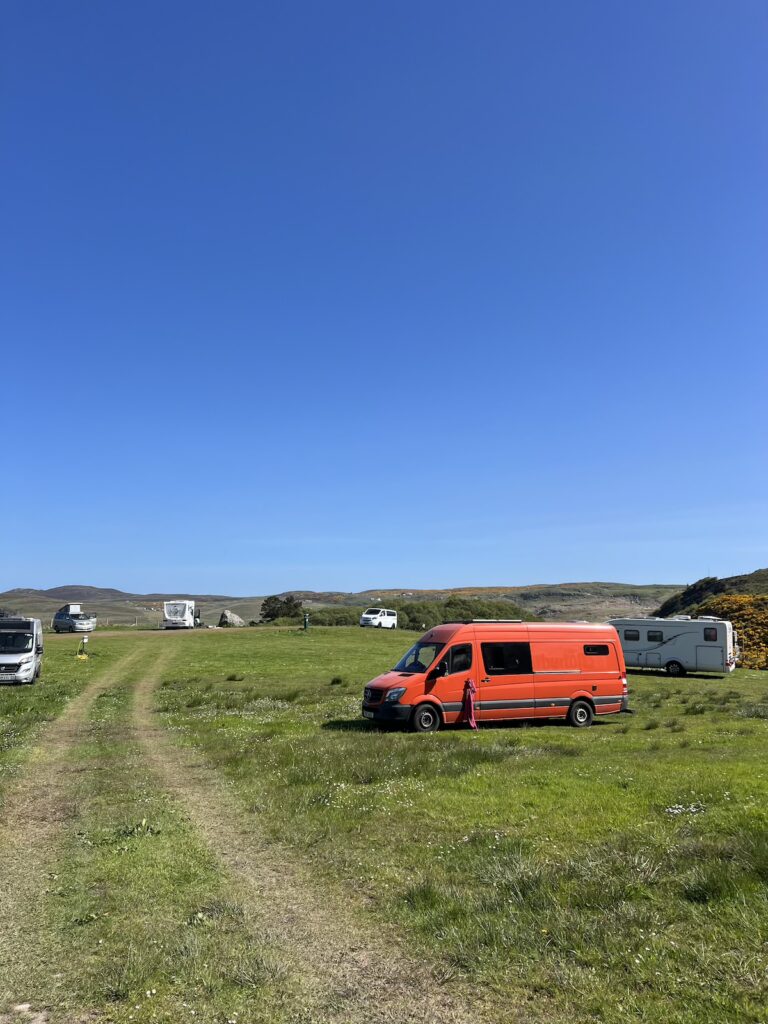
Bettyhill Viewpoint is a small pull-in where you can stop and take in the views. From here, you could also walk to the falls and enjoy a little picnic. (This is where the road trip starts to get really magical and the landscape becomes breathtaking). I stopped for the evening at Craigdhu, Bettyhill Caravan and Camping Site. They had really great shower facilities, and it was only a short walk to Far Bay beach, where I got to witness a magical sunset. There are no standard pitches here, you park up anywhere on the grass. It does have a hill in the middle, so if you’re arriving later in the evening, you might be left with a spot on a bit of a slope. The distance to the beach is what did it for me; I spent the late evenings and early morning here.
Day 4: Thurso – Achriesgill, Lairg
If you want a change from the beaches, Borgie Millenium Forest and River Walk is a beautiful walk along the river into the forest. There are both short and longer trails and plenty of parking. Roo isn’t a fan of the sea, but she thoroughly enjoyed paddling in the river.
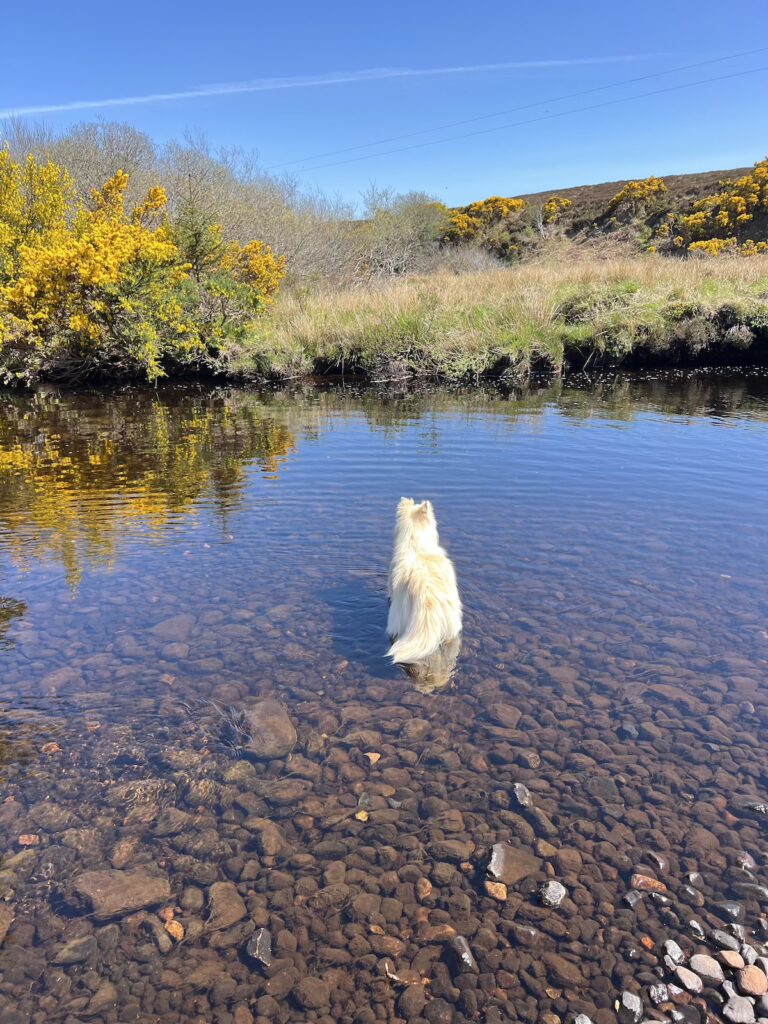
Tongue Causeway is a road that connects the land running through the sea. You can pull over in the middle to take it all in, but even if you’re just driving over, it’s a noteworthy point to make sure you really take in the view.
Ceannabeinne Beach was one of my favourite beaches en route. I saw it as I was driving past and had to stop! A big golden sandy beach with blue water, and if you’re after some adrenaline, you can also do a zipline across the beach with ‘Golden Eagle Zip line’. If I were by myself without Roo, I absolutely would have done this. Instead, I just watched from the beach in admiration.
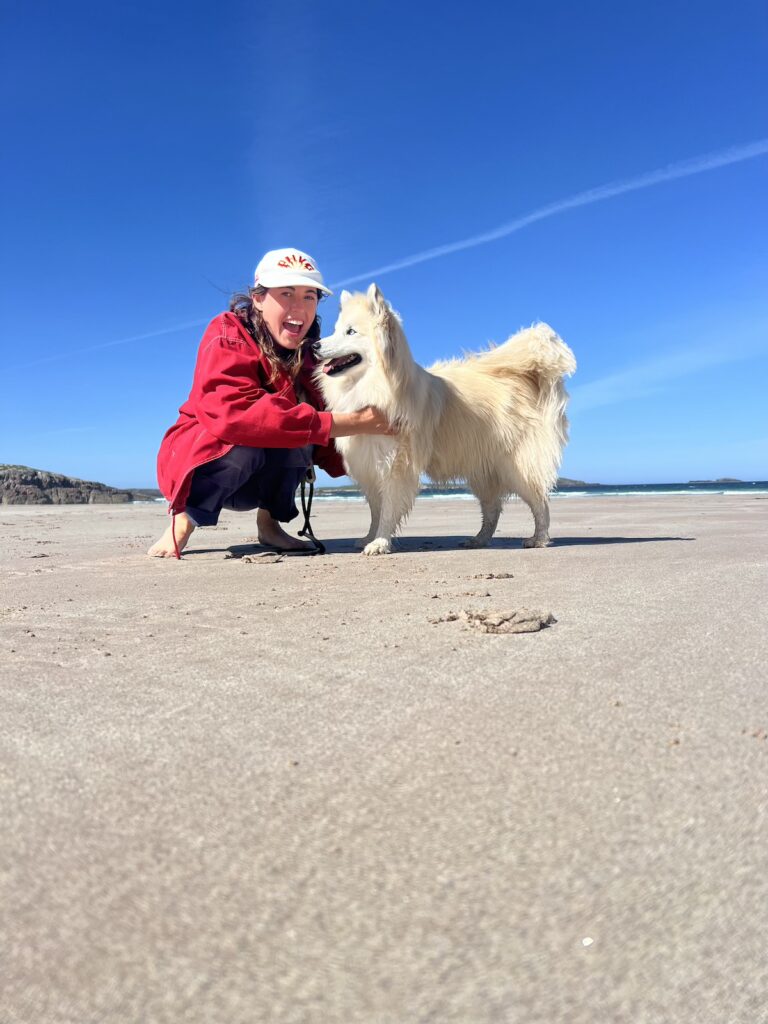
Smoo Cave is a quicker stop than I imagined. The cave is right next to the road, so after a few flights of steps, you can explore the cave in about 20 minutes and then head back up. If you like caves, it’s definitely worth a visit, and I would highly recommend an ice cream from Yarde Farm in the car park- I had Honey Berry (which is a fruit I had never heard of), homemade from local Scottish honey berries and it was the best ice cream of the trip!
Cocoa Mountain, Balnakeil is great, if you missed the hot chocolate at the start of the trip, and they have a second location here in Dornoch.
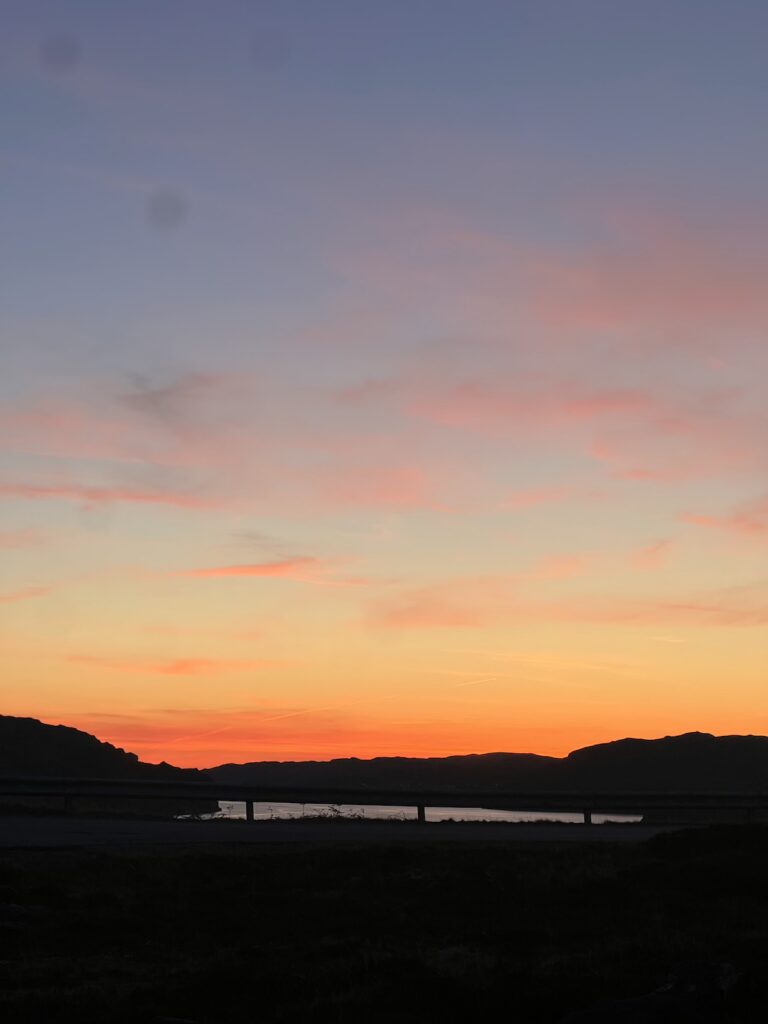
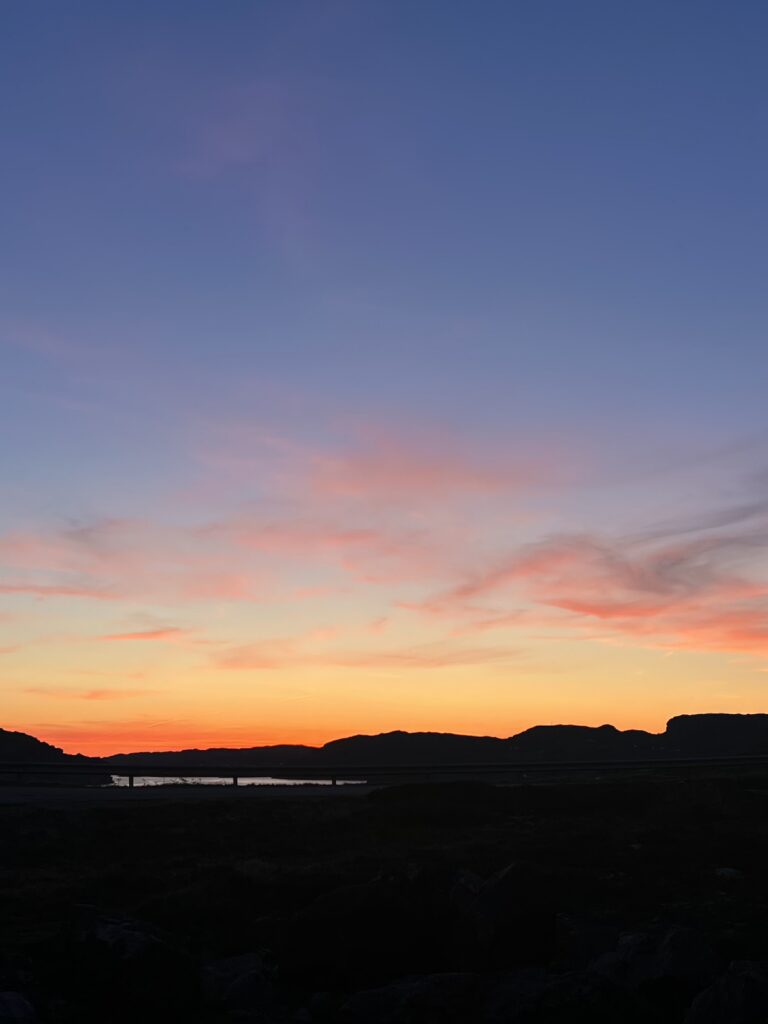
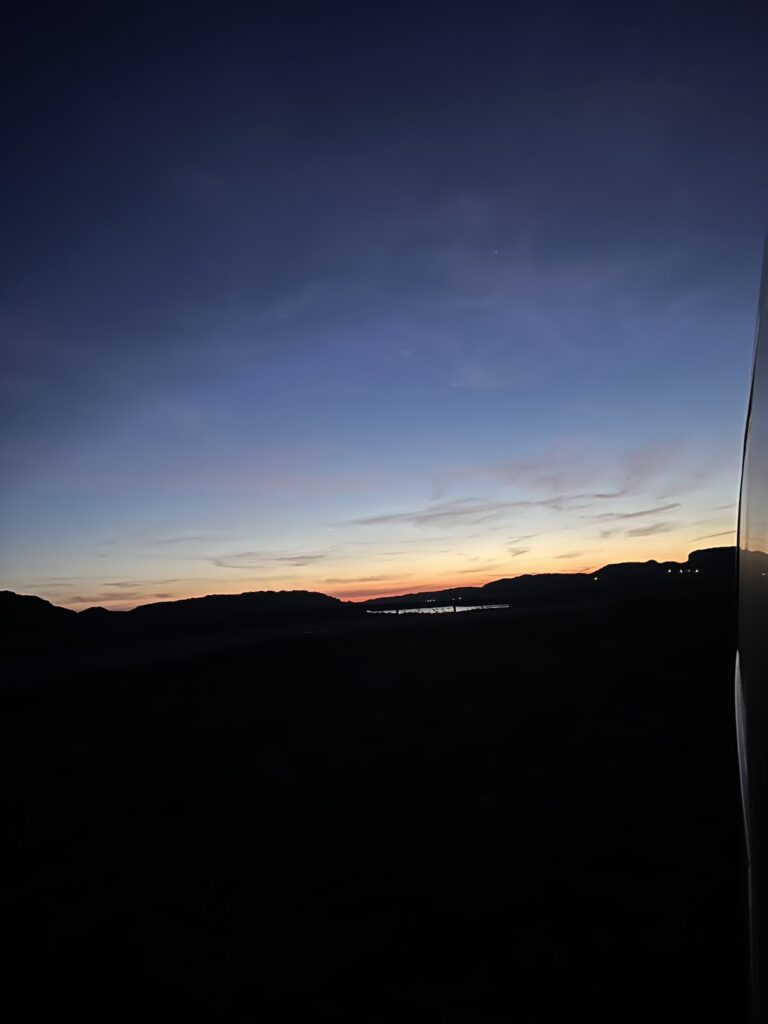
Between Durness and Achriesgill is a great point to stop for the night. There is a stop at Kinlochbervie Loch Clash Campervan Stopover that accepts a £10 donation for the night next to the harbour, or a few campsites in Sangomore. I used ‘park4night’ to find a spot for the night near Achriesgill. As you are so far north, the sunsets really are incredible on this part of the route, and they keep setting for a long time. I took this first picture at 9:50 pm, the second one at 10:12 pm, and then at 11:18 pm it was still going!
Day 5: Achriesgill, Lairg – Achmelvich Bay
Really enjoy the drive! From Rhiconich to Kylestrome, I stopped three times just to enjoy the view. The landscape across this stretch really is breathtaking. There are plenty of walks you can do from anywhere on this stretch.
Kylesku Bridge is a famous bridge that connects the land across a loch. A lot of people stop to get drone footage here because the bridge is so spectacular.
Allt Chranaidh waterfall is a short walk from parking on the road, and you can see this magnificent waterfall. It’s only a few miles from the bridge, and you’ll know you’ve arrived because there will be quite a few cars parked along the road. From here, I took a longer route along the coast because there are, in my opinion, some must-see spots.
Lochinver Larder is a famous pie restaurant. A must if you love pies. They have a restaurant with indoor and outdoor seating, or you can take it away. I tried a vegetarian savoury pie and a blackberry and apple pie, both delicious!
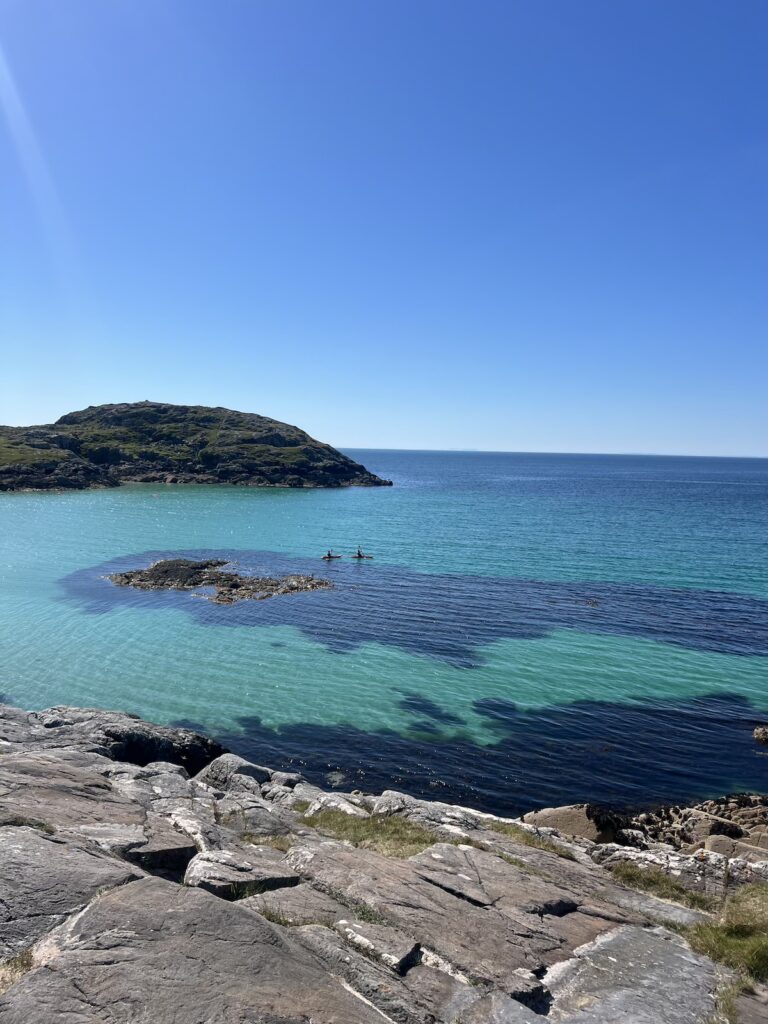
Achmelvich Bay is my all-time favourite beach. This is one where I think I really could have convinced people I was in the Maldives. The sand was so soft and the water so clear, with stunning views of the mountains in the background. The Bay is really calm, so it’s also a great place to paddleboard. There is a campsite here, ‘Achmelvich motorhome overnights by the beach’, which is the perfect place to stop for the night. If there’s no space there, there are several more further along. I feel like I need to emphasise again that I never thought I would see the day that I wore a bikini in Scotland, it might not be this hot when you go, but it will be just as beautiful!
Day 6: Achmelvich Bay – Ullapool
You could turn back the way you came from here and meet up with the road, or you can continue around the mini loop and stop at Clashnessie Falls. It can be a muddy path to get there, so wear appropriate shoes.
Ardvreck Castle is a beautiful ruin on the side of a loch; you can park along the road in several places, and it’s a great place to stop to rest and take in the views.
There’s also Allt nan Uamh Waterfall and The Bone Caves. I just stopped off to see the mini waterfall, which is close to the car park, and have a picnic, but the hike to the Bone Caves is supposed to be a moderate hike with a gradual incline, and the caves look really cool. Alternatively, if you’re looking for a more challenging hike with views, you can go to Stac Pollaidh. It took me an hour to get to the top, and I am not usually a hiker, but I really enjoyed the views.
Ullapool is a large village with a harbour, some lovely pubs and a Tesco for more supplies. This is a great place to camp, but the campsite gets booked up in advance, so it’s important to book here. Otherwise, many people ended up camping in the car park next to Tesco.
This is where you could loop back around to Inverness, but I highly recommend heading on to the famous Bealach na Bà.
Day 7: Ullapool to Applecross
This is one of the longest drives, so take in the scenery and stop at anything you think looks pretty! Loch Glascarnoch has some lovely views, and at Loch Clair, you can enjoy the views whilst walking around the loch.
You can stop off at Wee Whistle Stop Cafe for lunch. A wonderful cafe with homemade food, run by some really lovely staff. It is a quaint building surrounded by mountains with beautiful seating inside and outside. This place is also really popular with the locals (I say this because everyone sitting around me was from the local area), and has a little art gallery adjacent to it. I had a grilled vegetable and cheese toastie, and it was delicious.
The Bealach na Bà – this is not a drive for anyone who is a nervous driver. The pass is famous for a reason, and that’s because it’s steep and narrow! It’s a long road that cuts through the mountains along a cliff edge with some steep hairpin turns at the end. If you’re a thrill seeker, you’ll love it, and this is often people’s highlight of the trip. It is doable in a motorhome. I did it in my 6.4-meter long wheelbase (LWB) van, and I witnessed a long car tow come the other way.
Take it slow and look ahead for oncoming cars. It is much easier to see oncoming traffic on the way down. Whilst I think everyone should give it a go, it’s definitely not for the faint- hearted as a lot of it is one vehicle width, so you have to judge the passing points.
The Bealach na Bà becomes worth it to get to Applecross. A remote peninsula, where I highly recommend getting to know some of the locals and hearing about life in Applecross. With no shops, one doctor and a tiny school that has one class of all ages, it is a wonderful community, living life very differently to other parts of the UK. There is a great pub and a fantastic fish and chips van too.
If you like landscape art or a really good coffee, go and visit my friends at the Applecross gallery. They have some beautiful photographs of local Scottish landscapes. You can also see highland cows in Applecross. Spend the night in the campsite here and enjoy the beach.
Day 8: Applecross – home
Back down the Bealach na Bà, or around the west coast, going through Lonbain and
Cuaig is a beautiful drive along the coast.
If you’re heading back home south, I recommend an additional stop near Ben Nevis. A great campsite nearby is Red Squirrel Campsite. They often have deer roaming through, and you can swim in the river that runs through camp. It’s a two and a half hour drive from Applecross.
You can restock and refuel in Fort William and then debrief at the bottom of the mountains on the trip you’ve just had around Scotland’s NC500.
How many days do you need to do the NC500?
I did it in eight days, but you could easily spend longer exploring the Isles! I don’t recommend any less time, or you really won’t get to experience much of the route. Each day in this guide is packed with activities. The driving is roughly two-hours a day, which is broken up with many stops en route.
If you wanted to take it slower, you could absolutely stretch this itinerary out and stay in each place for longer than one night, using the campsite as a base to explore anything you missed.
Is there a set direction you need to take?
The NC500 is a 516-mile route traditionally starting and ending in Inverness, but there are no rules; you can explore it however you like. I travelled the NC500 anti-clockwise, starting at Inverness, travelling up to John o’Groats, and then along to the west coast.
I think this is the best way to do it, as it really does keep getting better and better when you get to the West Coast. If you had more time, you could come off the route and explore more of the lanes in the North, visiting Sandwood Bay.
You could also get the ferry to the Lewis and Harris Isles. If I had more time, I definitely would have taken the bridge to the Isle of Skye and explored the Fairy Pools at the end of the route.
Where to stay?
This is a popular route, so both hotels and campsites get booked up quite quickly. I recommend booking these in advance where you can. Especially near any of the towns like Ullapool, which get very busy. Having said this, there were a few times early on in the route that I drove past someone’s land advertising a very reasonable night’s stay, with epic views.
These had no facilities, but if you are a self-sufficient vehicle with off-grid electricity, it can be a great option! These aren’t bookable as they’re usually a couple of unofficial plots in a field looking out to sea. They are viewably signposted from the road, so if you want to chance your luck, there are possibilities.
It’s a common misconception that the free to roam right in Scotland stretched to caravans and motorhomes, it does not. Regardless, people still attempt to wild camp in their vehicles. However you do the route, please be respectful of the locals and leave no trace at any point along the route. Scotland is beautiful, let’s keep it that way!
When to go?
I went in May 2025, and as I said, I was blessed with incredible weather; I really was very lucky. But it’s Scotland, the weather is not reliable at any time of year. I have family in Scotland that I have visited every year since I can remember, and it has never been as hot as it was that week.
So be prepared for all weathers, it can get pretty windy around the coast. The midges can get particularly bad from May to September, so bring your bug repellent if you’re going then. If you can, avoid peak times, which will be during any UK school holidays. Particularly the Scottish school holidays, which are a little different in the summer and start in late June and end mid-August.
In early May, I felt the busyness at the campsites and in some of the popular car parks, but the roads did not feel busy. I think this is due to the large extent of stops you could make on this trip. Although the official NC500 is a circular route, there are many little detours you can take along the way. You could do it many times and still see something different.
Things to note before your trip
Once you get to Thurso, there is not another big supermarket until near the end, so if, like me, you do a lot of cooking in your campervan, make sure you’re stocked up.
There aren’t many petrol stations en route. I recommend filling up a full tank at Inverness and then again at Tongue if you need to. If you are towing a caravan, please search for the petrol stations en route and do the relevant calculations before you set off.
Insuring your campervan
Whenever you visit Scotland, or any UK public road you’re driving your campervan on, you will need to have the right campervan insurance.
We can also find you deals on breakdown cover and annual van life insurance for trips, so you can have peace of mind on your next road trip.
Call us on 0344 381 9990 for a quick, no-hassle quote or book a callback at a time that suits you.