
We asked issy.outside to put together a travel guide for those who wish to go on a European road trip. Here, this guide takes you from Dover through Austria and Slovenia before spending several days exploring the Italian Dolomites.
I travelled this route in my van in early July in a Citroen Berlingo with a roof box (giving it a height of 2.25m), mixing campsites and mountain stops with hiking, swimming and via ferratas.
This was all part of a month-long adventure around Europe. But these first two weeks were packed with some of my favourite mountain landscapes, incredible swimming spots and adventurous climbs.
Travelling by van gave me the flexibility to explore at my own pace, stop off at places along the way and wake up surrounded by the mountains. Every day I had a new back garden.
This isn’t the most relaxed itinerary, and there’s a fair amount of driving involved, but if you love the outdoors and want to make the most of the Alps, here’s how I’d plan the trip based on my own experience.
Day one – Dover to Austria
Get the ferry from Dover straight to Calais. The Channel Tunnel is much quicker, but it’s often a little bit more expensive, so if you’re on a budget, weigh up whether time or your budget means more to you.
Start driving towards Austria. It takes around 12 hours to get there and you can edit your route using Google Maps to avoid tolls. Straight out of Calais is the A26 towards Arras and Reims which is mostly a toll motorway.
I made the mistake of going straight off the ferry on this toll road, and I very quickly spent 100 Euros! By avoiding the tolls you can stop off in Luxembourg en route to break the journey up. Fuel is also a good price there compared to other places. Utilising apps like park4night is great when needing to find park-ups, waste drops and water fill up points throughout your drive.
An important note is that, in order to drive in certain areas of France, you will need to order a Crit’ Air Sticker online. It’s basically a way of classifying vehicles based on their emissions (ULEZ in the UK). You can order one through the French government Crit’Air website before your trip. These are needed to drive through low-emission zones (also known as ZFE areas)
To drive in Austria motorways and ‘expressways’, the majority of vehicles under 3.5 tonnes will need a vignette for each day you are there. These can be bought online, near border crossings and even at some service stations. The longer the period you buy one for, the less you pay.
Germany doesn’t require a motorway vignette for passenger cars or most campervans. However, some cities do operate with low-emission zones that entail having a ‘Umweltplakette’ (an environmental sticker).
Day two – explore the Gosaukamm mountain range
Once you’ve had a good night’s sleep to recharge, it’s time to explore the Gosaukamm mountain range.
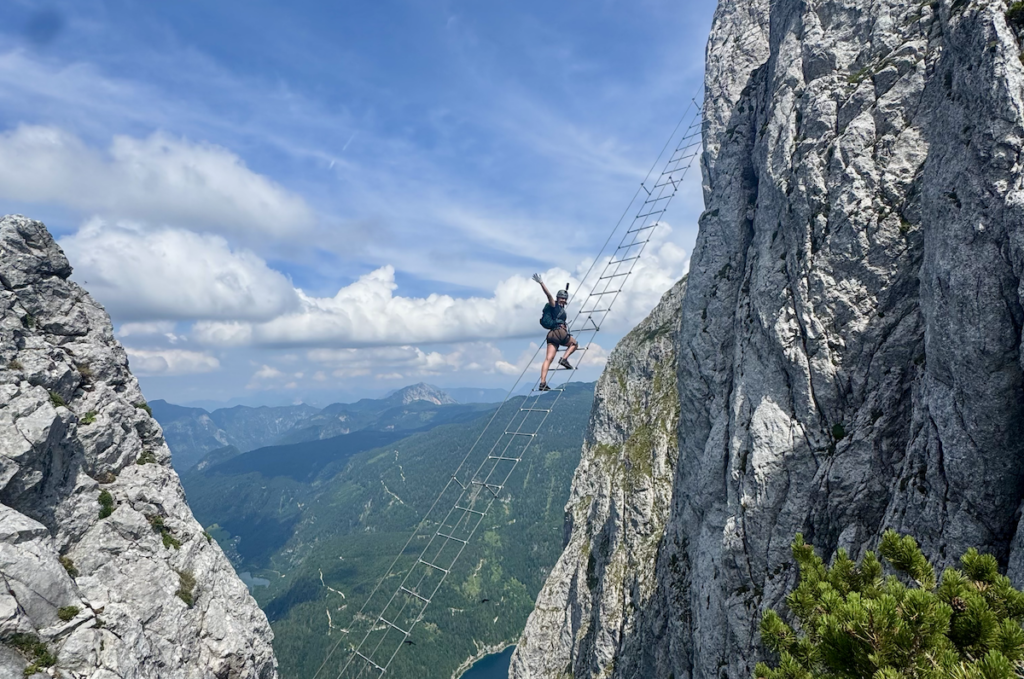
There are two via ferratas in the area which I would recommend. The first, a moderate warm-up called Laserer Alpin via ferrata, which runs directly over the Vorderer Gosausee lake. This features a rope bridge and a vertical ladder, and takes about an hour to complete.
If you have a bigger head for heights and have experience on via ferratas, you can take on the “Stairway to Heaven” (Intersport) climb. You can access this by taking the Gosaukammbahn cable car. Just be aware of the last run down the mountain back to the car park!
There is plenty of parking around the cable car station, and also easy low-level walks around the lakes. They are all pay and display. The lower car park is the biggest and best for larger vans. It’s just a five minute walk back up to the cable car station. We found it got busy quite quickly, so the earlier you arrive, the better.
Do not do any via ferratas without the appropriate equipment including: helmets, harnesses, a via ferrata lanyard, suitable footwear/clothing and gloves. You can rent via ferrata gear from the cable car station!
Day three – drive to Slovenia and visiting Lake Bled
Drive three-and-a-half hours to Lake Bled, Slovenia. Camping overnight in a van, outside of authorised locations, is illegal. So, you’ll have to stay at campsites. Luckily, there are lots of good, well-priced ones around.
We stayed in Camping Garden Park, which was a 15-minute drive outside of Bled. There, we were able to have hot showers, use their cooking facilities, refill our water and have a good van reset.
We visited Bled, had a swim in the lake in the designated swimming spots, grabbed a burger and headed back to the campsite.
There are plenty of car parks around Bled for smaller vans, such as Bled Central car park where you can only park during the daytime. Arrive early to bag a spot for the larger L3/L4 size vans!
Day four – visit Vintgar Gorge in Slovenia
Visit Vintgar Gorge while in Slovenia. When I visited, the entry fee included parking with no size limit on the van you can park, the shuttle bus and the safety equipment needed to enter the gorge. Check the current ticket options and what’s included before you go.
The colours are beautiful, and the waterfalls are stunning. There are options to extend your walk at the end of the gorge, visit a lovely cafe, and then get the bus back to your van.
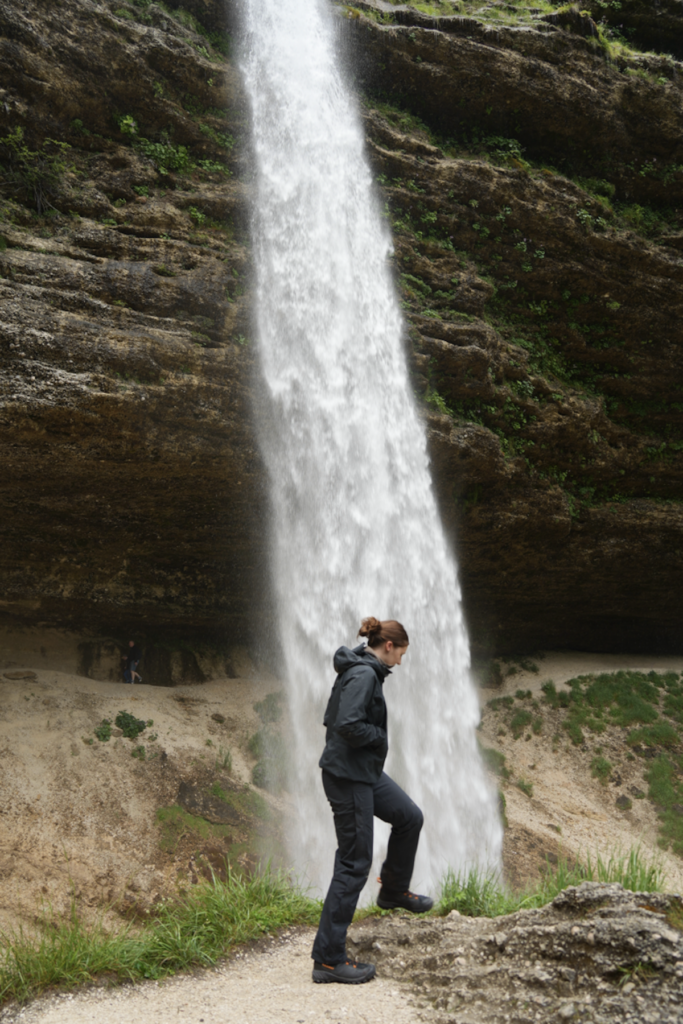
In the afternoon, head to Peričnik Waterfall near Mojstrana. This truly incredible waterfall plunges in two places. The first plunges 52 metres (one of Slovenia’s highest), and you can actually walk behind it. Parking for this is on the side of the road in marked bays.
In the evening, you can take a dip in Lake Bohinj, which is the largest permanent lake in Slovenia. There’s lots of paid parking and the water is clear, making for a perfect swim spot.
Day five – climb Triglav
It’s time to climb Triglav. When I visited, parking at the spot we used was free, but overnight stays in the van weren’t permitted there. Check local parking signs and current National Park regulations before your visit, as restrictions can vary by location.
The Triglav ascent takes a day, so it’s important to book a hut near the summit to finish your day off before heading back down the next day.
There are different rifugios to stop off en route to the summit, depending on the route that you do. It’s important that you pick the right route for you and your abilities.
We stayed in Triglavski dom na Kredarici hut, which is the highest mountain hut in Slovenia. In July 2025, the cost for one night was £26 without board. There was also a small additional fee for bedding. Make sure to check pricing on the hut website before booking. Book your bed as far in advance as possible to save disappointment.
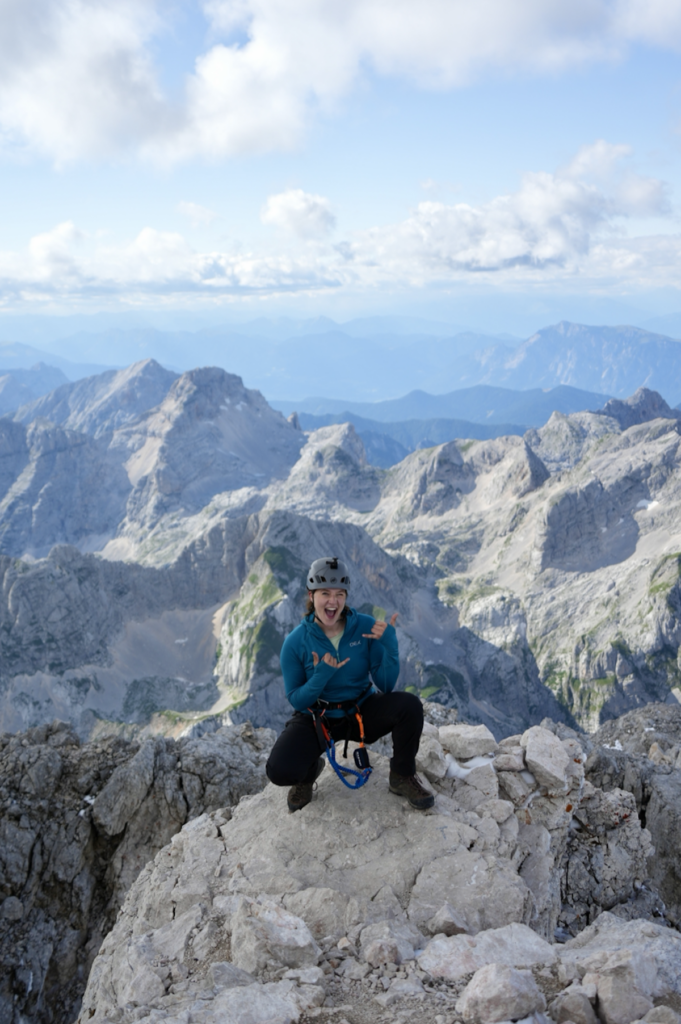
The hike to the hut is straightforward, following markers on the path. You should wear a helmet to protect yourself against rockfall. You need via ferrata gear to summit the mountain from the hut. It’s beautiful at sunset. Looking at the light casting on the Julian Alps; it’s an evening I won’t forget.
Day six – drive to Italy
Give yourself a bit of a rest day.
From Triglav National Park, make the four-hour drive to Cortina in the Dolomites.
Watch the sunset from Passo Giau whilst you’re cooking your dinner in the van. There are lots of large parking spots below the main viewpoint for larger vans, which fill up quickly in the evening.
For me in my little van, I was able to get a spot right in front of Passo Giau. If you have them, levelling blocks would be a great thing to have to help in those awkward park ups, which often (and most annoyingly) have the best views.
Day seven – hiking day
Hike to Lago di Sorapis. This is a popular circular walk for good reason, and has lots of roadside parking at the trailhead, and a bigger car park just down the hill which is free.
The hike is around 13km and suggests you should allow between four and five hours to complete it, so that you have time to rest and enjoy the lake halfway round. Make sure you choose suitable footwear and wear appropriate clothing. The weather in the mountains can change quickly!
There is also a rifugio hut at the lake, which serves food and drinks.
Day eight – visit the Dolomites
If you like via ferratas, then the Dolomites is the best place to be. A great one to start with is Via Ferrata Sottotenente Fusetti, which is suitable for beginners with a good level of fitness. There is free parking next to the war museum.
Only do via ferratas if you have the correct safety equipment, including a harness, helmet, via ferrata lanyard, and suitable footwear and gloves.
This via ferrata takes on a mountain with a rich history from World War I. It features historic trenches, military lookouts and 360-degree views of major landmarks, including the Marmolada, Tofana and Lagazuoi.
Allow for between four and five hours to complete this climb.
Day nine – take in breathtaking views
The Cadini di Misurina viewpoint is incredibly popular. When I visited, parking needed to be booked in advance and cost €60 for a van. Prices and booking arrangements can change, so check the latest information before planning your visit.
It’s a beautiful viewpoint, but how about watching the sunrise/sunset from the Cadini Group mountains themselves?
Whether you want to hike or enjoy a via ferrata too, the views are incredible.
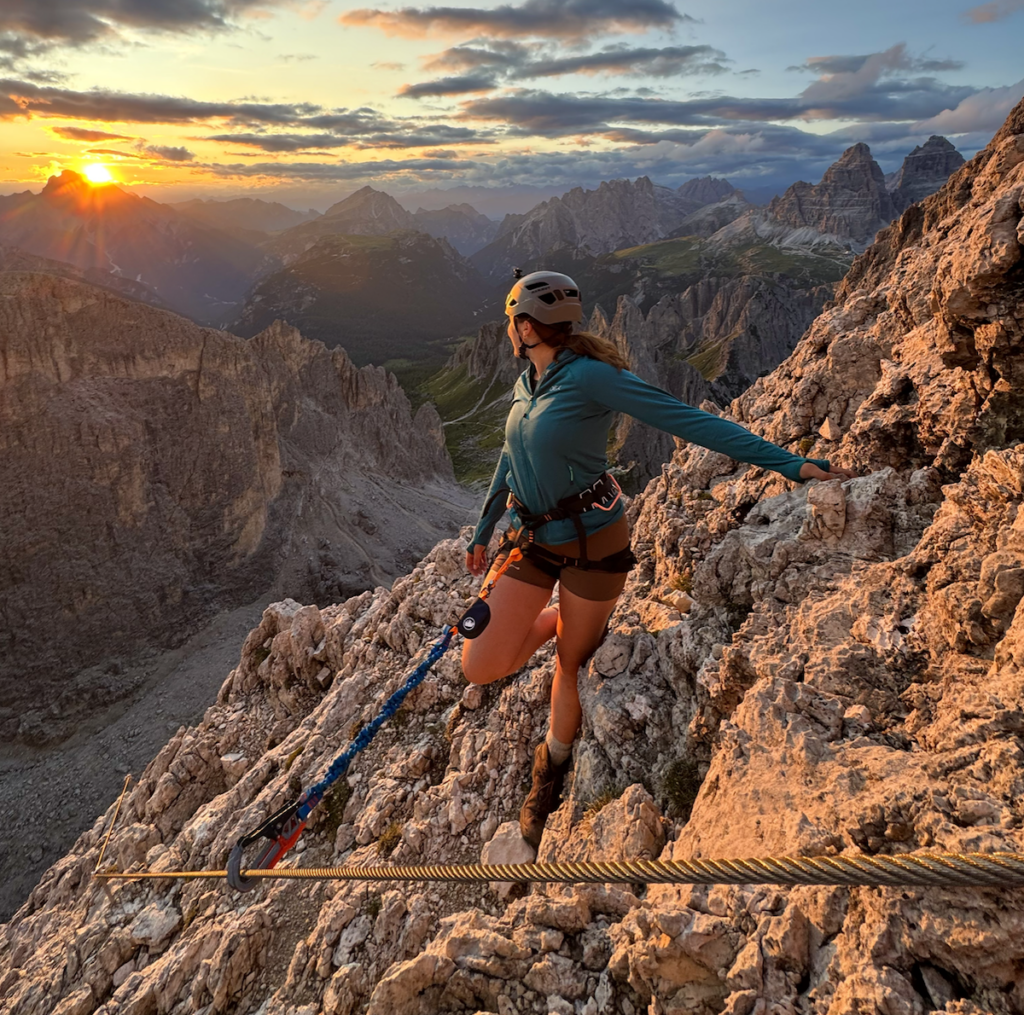
Via Ferrata Merlone doesn’t have many technical sections, just a lot of exposure as you climb ladders to the top. The approach is around one hour and 45 minutes, and the climb/exit is about two hours and 30 minutes.
There is a mountain hut at the bottom to rest at, and the views are utterly incredible.
Parking for this route is in the area of Lake Misurina. There are some smaller car parks which are suitable for bigger vans, but the car parks on the edge of the lake have height restrictions. After you come back down from your hike, why not go for a pizza at one of the restaurants by the lake. There’s nothing like having a good pizza when in Italy.
Day 10 – take a slower day in Cortina
If you’re wanting a slower day, park up around Lago di Landro and take a dip. But be warned, while the views are quite simply jaw-dropping, the ground underfoot is slippery.
It’s a perfect spot for a swim, and there’s also a café on the roadside for food and refreshments. Use park4night here to check for water refill points.
Visit Cortina town. There are some lovely outdoor shops and places to explore. A real favourite cafe of mine that I visited many times was Caffè Paoletti di Follina. This place had beautiful pastries and hot chocolate, which was thick and creamy.
If you’re looking for a campsite to break up the van park-ups, access some Wi-Fi, do your laundry and have a hot shower, I have two recommendations. Both Camping Rocchetta and International Camping Olympia are close to Cortina and were brilliant places to stop off at.
A highly recommended park up in Cortina is Parcheggio pubblico gratuito Rio Gere. There are no height restrictions, with a massive parking area and a bar on the opposite side of the road, where you can use their toilets if you buy a drink.
Day 11 – hike up Monte Piana
Today you’ll hike to one of the most historical summits in the Dolomites, which has 360-degree panoramic views of other hotspots in the area. Monte Piana stands at 2,324 metres tall and, in World War I, major battles were fought on its summit between the Italians and the Austro-Hungarians.
Between 1915 and 1917, roughly 14,000 soldiers died here, with the majority of casualties being claimed by frostbite, avalanches and extreme weather as opposed to direct combat.
While its history is rather dark, it is an absolutely beautiful mountain and is home to the Monte Piana open-air museum. You can explore restored trenches, tunnels, dugouts and military emplacements. Parking for this hike is at Lago di Landro.
Day 12 – take on the Fanes Waterfalls
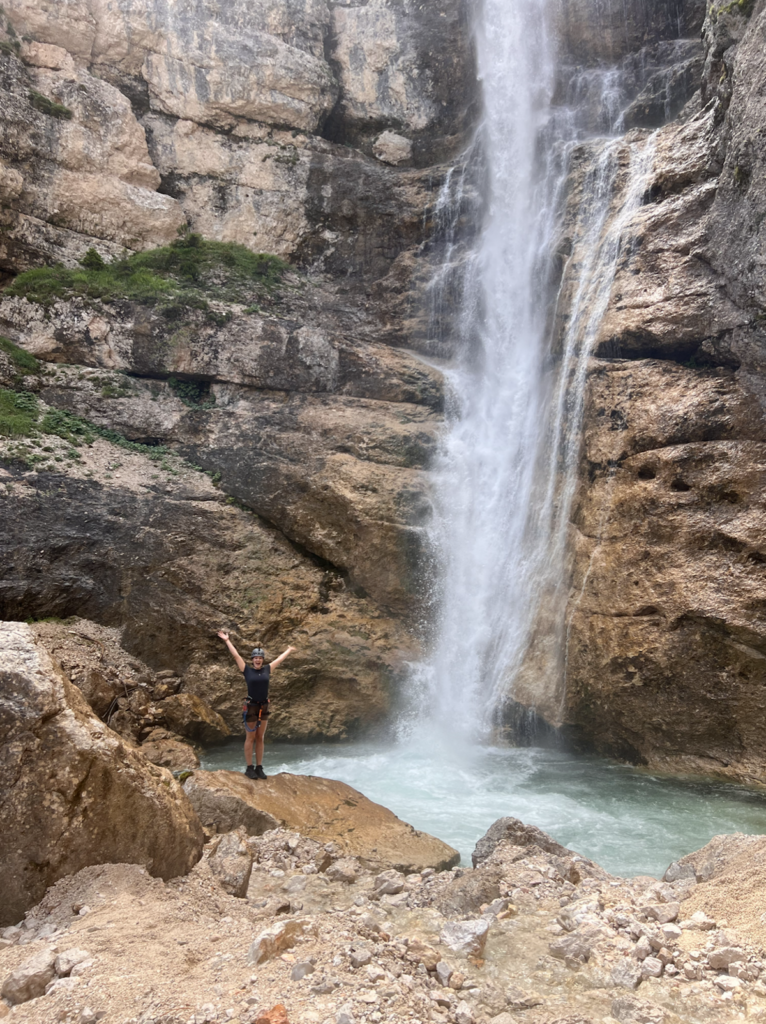
There is one easy via ferrata you must complete when in the Dolomites. Its main feature could be likened to that of the waterfalls that you can walk behind in the Brecon Beacons in south Wales.
Via Ferrata Giovanni Barbara takes on the Fanes Waterfalls, which are an impressive sight to be seen. The approach doesn’t take long, and it is an easy ferrata to complete. There were young children climbing with us!
Parking is available for Fanes Waterfall at Pian de Loa car park, but note there is a height restriction of 2.5 metres and its pay and display.
Day 13 – take in the Dolomites landscape
This day is for the more adventurous via ferrata climbers, with the grade of this climb at the top end of the scale. Via Ferrata Cesco Tomaselli is a very difficult, highly exposed historic climb on the face of Punta Fanes Sud. You may use the large free car park at the bottom of Passo Falzarego, where you can also find a gift shop and cafe.
Allow for six hours for this route. You should not take this one without the appropriate gear and strong experience is needed to safely complete it.
The approach takes in the classic Dolomite landscapes and is one to remember. Parking in the area gets busy very quickly, so make sure to arrive early for this one. Parking in the Dolomites follows a consistent theme, getting full throughout the day. When driving your van there, allow extra time to find a space big enough for you.
If you’re not a climber and would still like to see the beautiful views from the area, you can get the Lagazuoi cable car up to the refugio, have a drink, and explore the historical tunnels on the mountain.
On the descent, instead of getting the cable car back down, if you have a head torch and helmet, you can walk down the inside of the mountain, exploring more tunnels before coming out at the bottom.
Day 14 – drive from Italy to France
There is so much to do in the Dolomites, and it can get very overwhelming if you don’t take a few days every now and again to rest, recuperate and plan out your next move.
Overall, the Dolomites is very welcoming for van lifers, and we never had any shortage of park ups to choose from. Mobile coverage was also surprisingly good too!
From the Dolomites, I then drove across Italy to the Aosta Valley for a few days before driving on to Chamonix for the remainder of my month in Europe.
It took an entire day of driving (around 10 hours to avoid the expensive tolls) to get to the Aosta region, and over the next few days, we hiked to different bivouacs in the area for the night.
Extra tips and information for your trip
I headed out to Europe at the beginning of July, so not quite the peak of summer. While the weather was warm, it wasn’t reaching the high 20s, and so ensuring I had plenty of layers was important. There was more rain than I would have liked, but you can’t control some things.
The beauty of going out at the end of June, or early July, is that you miss the massive rush when August hits. It’s generally quieter at this time of year, but still be aware of the crowds.
If you’ve never driven in Europe before, there are a few things to be aware of. Firstly, make sure you have EU insurance, have the UK sticker on the back of your van, put on some light reflectors to your headlights if needed, and take it slowly once you’re off the ferry in Calais.
The first few hours of driving can feel weird, especially when approaching roundabouts and junctions when driving on the opposite side of the road. But it is something you quickly get used to, and it becomes second nature. Your biggest challenge will be remembering to drive on the left-hand side when you get back to the UK.
I found the roads in Austria and Slovenia to be easy, with not many, if any, steep or narrow mountain roads. However, in the Dolomites there are many more steep mountain passes, which require good clutch control. Due to it being a popular tourist destination, there are a lot of coaches to share the road with, so be aware of those.
Allow a little bit longer than the maps suggest to get to your destination, as making plenty of rest stops and ensuring you have enough food and fuel are important.
And finally, one mistake that I made that I will definitely avoid next time is the tolls. I got straight off the ferry and started driving up the motorway, quickly racking up almost €100 in toll fees!
If you don’t mind driving a little bit longer, you can avoid tolls. You don’t have to drive much further; it just takes longer as you’re not on the motorways, and you’ll save lots of money. If time is more important to you, jump on the toll roads and cruise to your destination.
Campervan insurance, with EU cover included as standard
Whichever European country you plan on driving to, be it Austria, Italy, Slovenia, France or another, you will need to ensure you have the right campervan insurance. Sterling can help you find policies that can cover you in Europe for up to 90 days as standard, or even a full 365 days on the road if you’re looking at the trip of a lifetime.
We can also find policies with European breakdown cover and annual van life insurance for trips, so you can have peace of mind on your next road trip.
Call us on 0344 381 9990 for a quick, no-hassle quote or book a callback at a time that suits you.