
When taking your practical driving test, you will be asked two safety questions by your examiner, these are known as ‘show me, tell me’ questions, but what will they be, and how do you answer them?
These questions are a crucial part of your test. You will be asked a ‘tell me’ question before you begin driving, and a ‘show me’ question during your test.
In total, there are seven ‘show me’ questions and 14 ‘tell me’ ones that you will need to know how to answer. Here we explain all that are stated on the government website and reveal how you should answer them so you can feel prepared for your test.
Why are the ‘show me, tell me’ questions important?
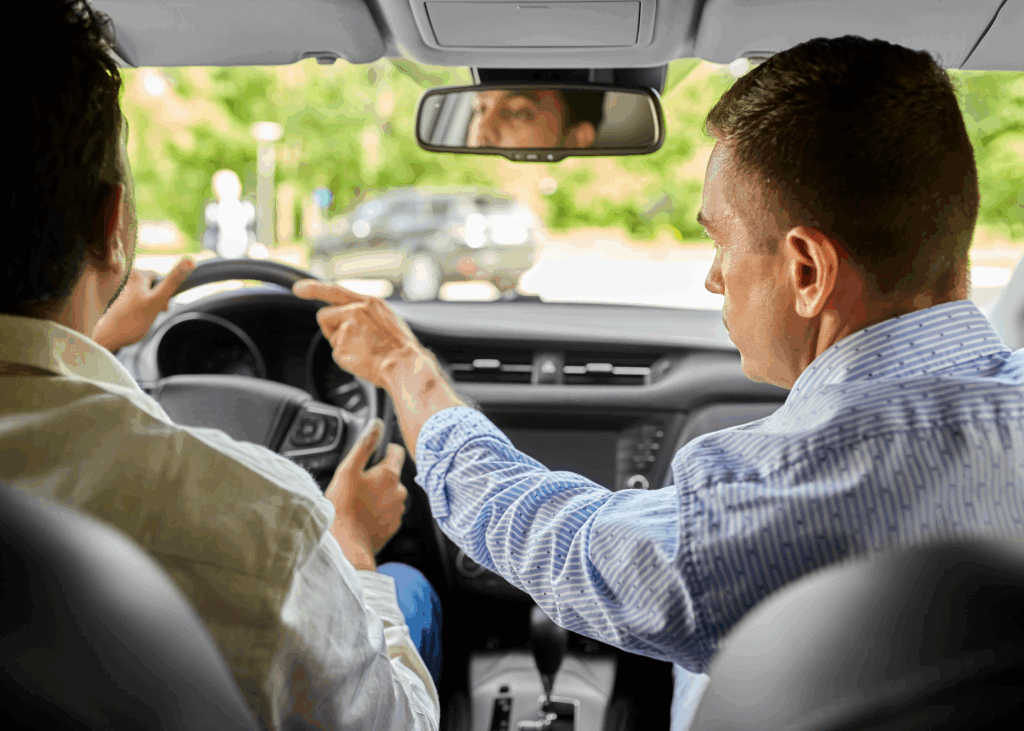
Safety is paramount for every driver driving on the road in the UK, and these questions are designed to keep everyone safe.
They are designed to help you understand basic car maintenance, ensuring you’re prepared for ‘real-world’ driving situations. They also reduce the risk of accidents caused by simple maintenance checks, such as checking your brake lights and indicators are working before you set off, being missed.
Failing to answer each question will result in a minor fault, and doing so in the ‘tell me’ question will count against you before you’ve even driven out of the driving test centre.
If you are deemed to have carried out a ‘dangerous’ move during the ‘show me’ question, then you could receive a major fault and will have failed your driving test. This is why going over this now is your best bet for success.
The Driver and Vehicle Standards Agency (DVSA) set the questions.
‘Tell me’ questions
The ‘tell me’ questions are all about asking you to carry out a safety check for your vehicle before you start driving. They are akin to what you will need to do when you are out in the real world of driving, as opposed to letting your instructor do them for you.
Tell me how you’d check that the brakes are working before starting a journey
Your brakes should not feel spongy or slack; you will need to test this before you set off. The car should also not pull to one side.
You will need to tell the examiner how you would check to ensure your brakes do not feel like the above. You will do this by gently putting pressure on the brake pedal. Here you will be able to feel if the car is pulling to one side or not.
Tell me where you’d find the information for the recommended tyre pressures for this car, and how tyre pressures should be checked
You can find this information out in several ways. The most common way is to check the vehicle’s manufacturer’s guide that comes with the car. You can also check this by looking at the sidewall of the tyre itself.
To check the tyre pressure, you will need to use a pressure gauge. You can do this by removing the valve cap, attaching the gauge to the valve, which will then tell you the reading. From here, you can adjust accordingly to the pressure that is needed.
Drivers should check the tyre pressure when tyres are cold and don’t forget to put the valve cap back on and make sure it is secure.
Tell me how you make sure your head restraint is correctly adjusted so it provides the best protection in the event of a crash
Before the actual driving part of your test commences, you may be asked how to adjust your head restraint.
You will need to make sure the rigid part of the head restraint is at least the same height as your eyes or the top of your ears and as close to the back of your head as possible.
If the restraint is not adjustable in the car, your examiner will tell you.
Tell me how you’d check the tyres to ensure that they have sufficient tread depth and that their general condition is safe to use on the road
Checking your car’s tyre health is one of the most crucial maintenance checks you will need to do as a driver.
If you are asked this question, you will need to explain how to check their tread depth and the overall condition they are in before you start a journey.
You need to ensure there’s no bulges, cuts or cracks in the tyre, that each tyre has at least 1.6mm of tread depth across the central three-quarters of the breadth of the tyre, and around the entire outer circumference of the tyre.
Tell me how you’d check that the headlights and tail lights are working. You don’t need to exit the vehicle
You will need to explain how to operate the switch and then walk around the outside of the vehicle to check that the lights are working properly.
It should be noted that, as this is part of the ‘tell me’ section, you will not need to actually get out of the car to check; rather, you will just need to tell your examiner. However, you should also note that you may have to turn the ignition on.
Tell me how you’d know if there was a problem with your anti-lock braking system
Your dashboard warning lights can indicate many issues with your car, and knowing what each of the lights mean is key to ensuring your vehicle is in good working order.
The anti-lock braking system (ABS) light will show up if there is a fault with the ABS braking mechanics.
You will need to point to which of the lights is for the ABS lights. Even though it will not illuminate on the day of your test, you can still see which one it is due to the letters being spelt out on your dashboard.
Tell me how you’d check the direction indicators are working. You don’t need to exit the vehicle
You will need to tell your examiner how to operate the indicators for an upcoming turn in the road. This is something you will know like second nature after the hours you have spent learning to drive.
Just simply explain how you push the indicator up or down, depending on whether you are turning left or right.
Tell me how you’d check the brake lights are working on this car
To answer this question, you will need to explain how you would operate the brake pedal and make use of the reflections in windows, doors or another reflective surface in the surrounding area to check they are working.
You could also suggest asking someone else to tell you whether they turn on when the brake is applied.
Tell me how you’d check the power-assisted steering is working before starting a journey
The examiner will want you to explain two checks you would do before you start a journey.
These are to gently turn the steering wheel whilst the engine is on, which should result in a noticeable but slight movement.
You will also need to test the wheel after just moving off by turning it to reveal if the power assistance is functioning.
Tell me how you’d switch on the rear fog light(s) and explain when you’d use it/them. You don’t need to exit the vehicle
The examiner will want you to explain how to turn on your rear fog lights. Most cars will have a separate button on the right of the steering wheel to do this.
Alternatively, you can look out for the icon, which consists of a semi-circle alongside a vertical wiggly line and three horizontal lines through it. The front fog lights symbol will have three diagonal lines.
You would use these lights when driving in adverse weather conditions, such as fog and heavy snow.
Tell me how you switch your headlight from dipped to main beam, and explain how you’d know the main beam is on
You will need to turn the engine on and either push or pull the full beam indicator to turn them on. Once on, you will see a blue light on your dashboard to signal they are on.
Open the bonnet and tell me how you’d check that the engine has sufficient oil
You need to explain how to identify the dipstick (oil level indicator) under the car bonnet and how to check the level against the minimum and maximum markers.
This is done by locating the dipstick, which is usually marked with a yellow ring-shaped handle and pulling it.
You then need to wipe the oil stick indicator, replace it, then pull it out again to check the oil level.
Open the bonnet and tell me how you’d check that the engine has sufficient engine coolant
To do this, you will need to check the level marker on the side of the coolant tank. This is usually found by looking for a raised line with an arrow pointing to it or the words ‘level’ or ‘max’.
If the water level is within the acceptable range, then coolant is sufficient; otherwise, you will need to tell the examiner how you would open the cap and fill to the appropriate level with engine coolant.
Open the bonnet and tell me how you’d check that you have a safe level of hydraulic brake fluid
To answer this correctly, you will need to state that you open the bonnet, locate the reservoir (found on the driver’s side of the vehicle), open the cap and see if the fluid is in between the two marked levels.
‘Show me’ questions
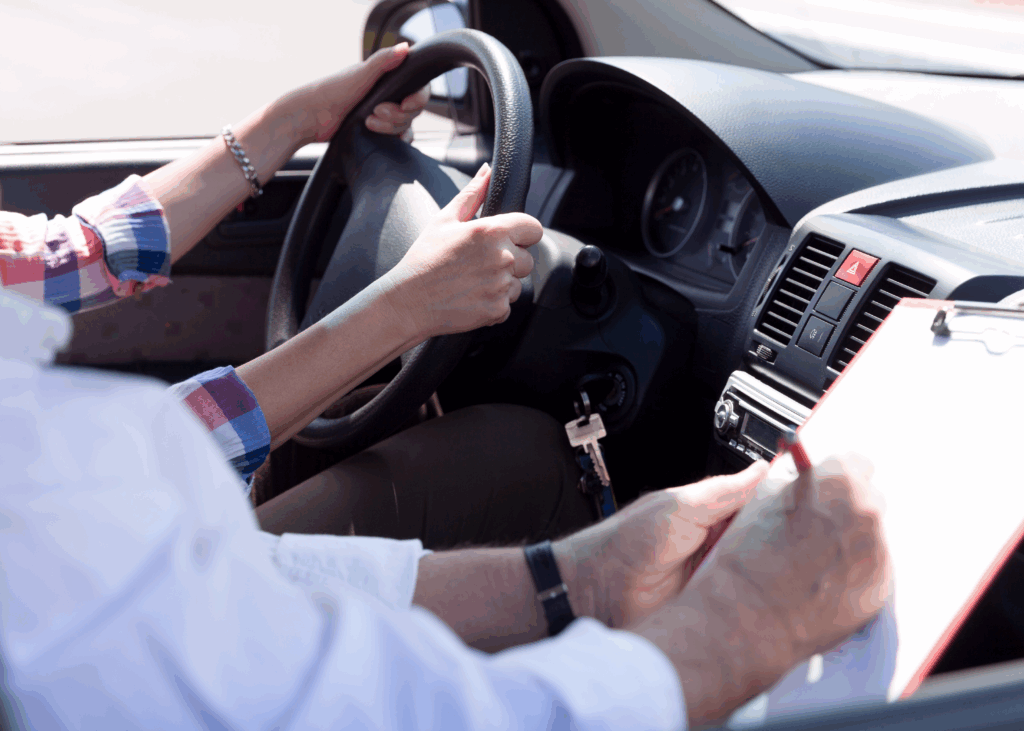
The ‘show me’ questions will be asked at some stage when you are driving, but only when your examiner deems it safe to do so. They will let you know when this time comes.
When parked, you will need to make sure the handbrake is on, and whilst the car’s engine doesn’t need to be turned on, you will need to make sure you have either turned the key or pressed the ‘start button’ to allow you to control the electrical components.
When it’s safe to do so, can you show me how you wash and clean the rear windscreen?
You can normally do this by pushing or pulling the indicator stick on the right-hand side of the steering wheel. In some vehicles, it may be a toggle on the stalk.
Remember to keep both hands on the wheel at all times, and only use your fingers to engage the controls.
The Highway Code clearly states that the windscreens and windows must be kept clean and free from obstructions.
When it’s safe to do so, can you show me how you wash and clean the front windscreen?
You will likely only need to pull the indicator stalk on the right-hand side of the steering wheel towards you with a finger. Ensure you keep both hands on the steering wheel and your eyes on the road when doing so.
When it’s safe to do so, can you show me how you’d switch on your dipped headlights?
You may be asked to demonstrate that you can operate the car’s headlights during your practical driving test. These will be turned on by the switch of a knob, so it’s worth looking out for this before you start driving. These are usually found on the stalk to the left-hand side of the steering wheel.
When it’s safe to do so, can you show me how you’d set the rear demister?
Initially, to do this, you will need to turn the fan on. Set the dial to blow air to the rear windscreen and turn the heat level to warm.
Most modern vehicles have a separate button that targets the rear windscreen to help demist quicker. It often has an icon in the shape of a square with wavy lines flowing into it from below to represent the warm air being blown at the window.
When it’s safe to do so, can you show me how you’d operate the horn?
To use the horn, you will need to push the centre of the steering wheel or press a button just slightly off-centre. You don’t need to make it beep for long, you just need to demonstrate that you know how to use it when appropriate.
When it’s safe to do so, can you show me how you’d demist the front windscreen?
Start by turning the fan on and setting the dial to blow air to the front windscreen, and turn the heat level to warm.
There might be a separate button to press, which can accelerate the process. This is usually in the shape of a windscreen with wavy lines flowing into it from below.
When it’s safe to do so, can you show me how you’d open and close the side window?
When safe to do so, use your right hand to push the side window button on the panel of the driver’s door.
To open the window, press the button for the front-right door down and to close, simply pull up.
Insurance for learner drivers
Whether you’re getting ready for a practical driving test or you’ve just started learning how to drive, Sterling can make sure you’re insured properly. We offer learner driver insurance tailored to your needs.
Call us on 0344 381 9990 for a quote or request a callback at a time better suited to you.