
Finding somewhere to park in the UK isn’t always simple and, if you’re running out of options, you may be wondering if you can park on yellow lines or not. With different rules and signs, it can be hard to know what’s allowed but once you know, parking will be a lot easier.
In this guide, we’re breaking down all the rules and regulations when it comes to parking on yellow lines, including how to spot the appropriate road safety signs and how to avoid getting fined.
What are yellow lines for?
Yellow lines are typically marked on the side of a road. They’re used to manage parking in a specific area to ensure safety and smooth traffic flow.
Can you park on single yellow lines?
If a road is marked with yellow lines, you should look for signs nearby to tell you what restrictions are in place. With single ones, a sign will include information on parking limitations like time restrictions. You should then be able to park there during the non-restricted hours.
Sometimes there won’t be a sign nearby and you may need to check with local authorities or the council as there will still be stipulations you need to follow.

Can you park on double yellow lines?
In the UK, you are not allowed to wait or park on double yellow lines at any time. However, as long as you don’t leave your car and there are no yellow dashes on the kerb, you are allowed to pull over briefly to let someone in or out of the vehicle or load and unload heavy goods.
Can Blue Badge holders park on double yellows?
Blue Badge holders can park on double yellow lines for up to three hours, as long as the badge and time clock are on display, you don’t obstruct other road users and there aren’t yellow dashes on the kerb, which indicate a loading or unloading restriction. Note that some parts of London don’t allow Blue Badge holders to park on double yellows so always check the borough’s rules beforehand.
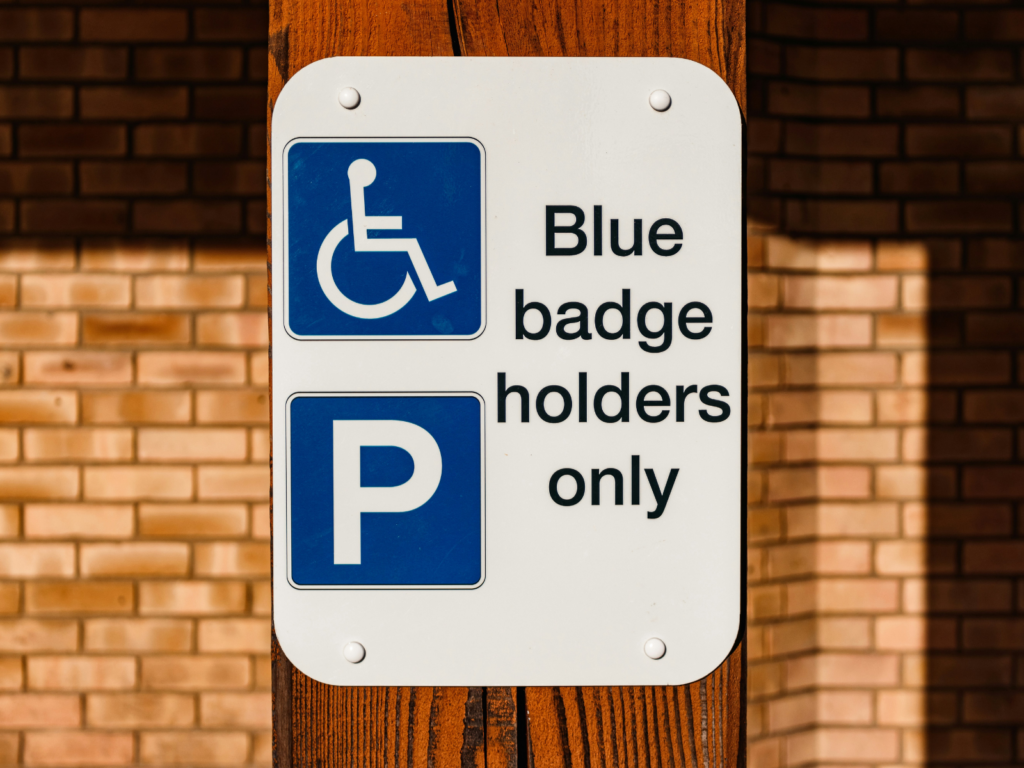
The rules in Northern Ireland are similar but you must display your Blue Badge and you won’t be able to park within 15 metres of a junction or loading/unloading area.
In Scotland, you can park on all yellow lines as long as there’s no loading restrictions or signs saying otherwise. You may be asked to move if your parking isn’t considered safe.
Different areas and cities have different parking schemes so make sure you check those and also look out for signs. Even with a Blue Badge, you can’t park on yellow lines in off-street car parks.
Are there other reasons you can park on a double yellow line?
If you are loading or unloading heavy/large goods from your vehicle and you’re not obstructing anything else, this is typically allowed. Quickly dropping off or picking up passengers is also typically allowed but don’t ignore nearby signs that may say otherwise on certain roads.
Some may think that breaking down is an exception for parking on double lines but, unfortunately, this isn’t true. When you break down, you need to find a safe place to park so, somewhere with single yellow lines could work.

Is there a time limit for parking on yellow lines?
When it comes to how long you can park on road lines, it will depend on the area. The signs near single lines will typically tell you the allowed time so make sure you take a look before leaving your vehicle.
If you are loading or unloading while parked on double lines, you’ll have a maximum of 20 minutes to do so.
Are any other vehicles allowed to park on double yellow lines?
The restrictions mentioned above are for all vehicles, excluding ambulances. They are allowed to park on double lines in emergencies.
Car insurance with Sterling
Wherever you park, you’ll want the right insurance. That’s where the experts at Sterling can help you out.
Get a car insurance quote by calling up on 0344 381 9990 or request a callback at a time that suits you.